Coloniality Unplugged: Cosmologies and Terrains of the Dark Matter
This is the story of the development of the special issue…
This is the story of the development of the special issue…
The Racial Justice in Praxis Conference 2017 was an intentional journey to create an academic conference accessible to all including academics, activists, and community members. By breaking down power structures, centering creative resistance, and honoring the voices of the community the conference became a transformative space for growth, connection, and radical joy. The conference was an eclectic gumbo that included research, dialogue, art, music, and culture. This is a written reflection of the process of planning that conference, centering the voice of community, and liberating institutional academic spaces.
How does one reclaim a village? This piece is about filling an empty space. A soul left to wither and die from knowledge stolen generations ago. I am only one person on a quest to reclaim knowledge meant to nourish my soul and generations to come. A journey which no one who has not experienced the emptiness, can understand. Imagine, never at rest because of the yearn to learn, just who you are. So many souls left to wither away a slow and painful death. To die of starvation is a painful death. The pain from hunger, the body craving nourishment, yet none in sight. Grabbing and clenching at your core leaving your body doubled over from pain. All life activity ceases to be carried out with clear focus because the nucleus of all human consciousness is centered around a basic need, nourishment. After all what is a body with no nourishment? An empty shell. The village, the place of protection and nourishment, once known is no more. This colonized environment has continued to snuff out the light of my people’s souls. The light has grown so dim we are losing control of who we once were, but there is power in our stories. We can keep our flames burning through our stories. Sankofa, retrieve what was ours, go back, get your knowledge and return. Reclaim the village.
As a tool for critical, participatory and socially transformative praxis, storytelling offers those typically silenced an opportunity to share personal stories (Sonn, Stevens, & Duncan, 2013). This is the aim of author. Whether in prose or narrative these stories from the village should be perceived as lessons, teachings, and/or scriptures. This is an acknowledgement of experiences had, to promote an awareness and awakening to the root causes of oppression. The narrative of the oppressed should be treated as delicately as one would treat any sacred journal about life because it chronicles the path of oppression and demonstrates how Dark Matter becomes a theoretical concept that fuels a Metaphysical Catastrophe.
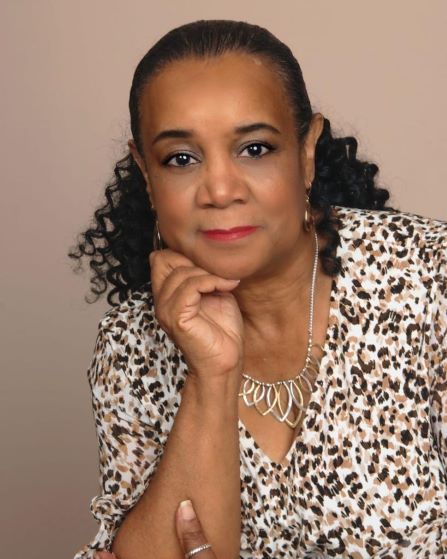
The “code of silence” embraced among many descendants of the African Diaspora, has its roots in the African to Black/African American experience during enslavement and the Jim Crow era. It is both a historical and contemporary survival strategy and is sometimes used as a means of resistance. The code of silence also has an association with “silencing” a well-known tactic of colonizers as well. The multiple contexts in which the code of silence or silencing are used may influence why it can be difficult to discern when these modes of communication are most beneficial to employ, if at all. Consequently, rather than protect, these concepts often reproduce and perpetuate colonialism ideologies. Using a personal story of the author, this article offers an example of how decision making can look when we are living from internalized colonialism. A model is also offered for transforming internalized colonialism and decolonizing our spaces. Furthermore, this article is an effort to fill the void in telling Black/African American women’s stories where historically they have been left out of the discourse. Telling our stories is healing and transformative.
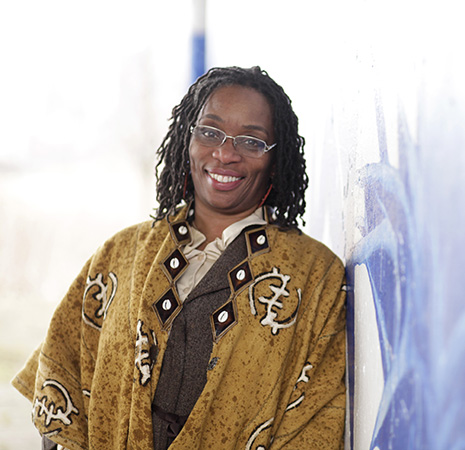
The article explores the continuity of the village through the experiences of four generations of women, each working within her own conscious knowledge of mothering, mothering practices, and her role in village life. The author tells the story as inheritor of indigenous ways of knowing passed on to her, the coloniality that disrupts and dismantles the practices she inherits and how decolonial praxis informs her voice, choices, and practices in response to coloniality. She contextualizes her family experiences through the motherline, the impact of coloniality on the motherline, and how each daughter sees herself in resistance to forces of coloniality and how their stories unfold. The motherline serves as a means through which mothers pass on to daughters strategies to resist coloniality and construct a narrative that centers her in her own womanhood. The author discusses potential ways to restore the motherline and heal connections to familial ways of knowing that have been weakened over many generations. She incorporates motherline theory and decolonial theoretical frameworks to explain how four generations of women reflect on mothering and healing and the act of finding and holding our space in the village.

The saying is that each generation is supposed to do better than the generation before it. I was told that we can never live the “American Dream” if we do not go to college, get a good-paying job, and buy a home. The question is, why are these human rights accessible for some and a struggle for others? I want to tell you about the history of my family’s survival. This story is important because it has blazed a trail for four generations of my lineage to live differently from our ancestors. Each generation has a painful but beautiful story of endurance. It could be a roadmap for so many fighting families. The purpose of my story is to bring awareness of the Black struggle and survival. I understand the journeys of my lineage and I would like to make a suggestion. We must learn who we are, where we come from, where we want to go, and how to get there, which would be based on our own sense of stability in a decolonized village.
The nature of this piece asks us to open ourselves up to operating at a different level of awareness, calling on a more creative, intuitive, and more abstract/poetic epistemological frame. This piece is a short fable-like story exploring the ethics of the human within moments of immense struggle. For those of us who grapple with living within dynamics of various forms of oppression, this is essential reading for deeper discovery into ways of maintaining a sense of freedom.
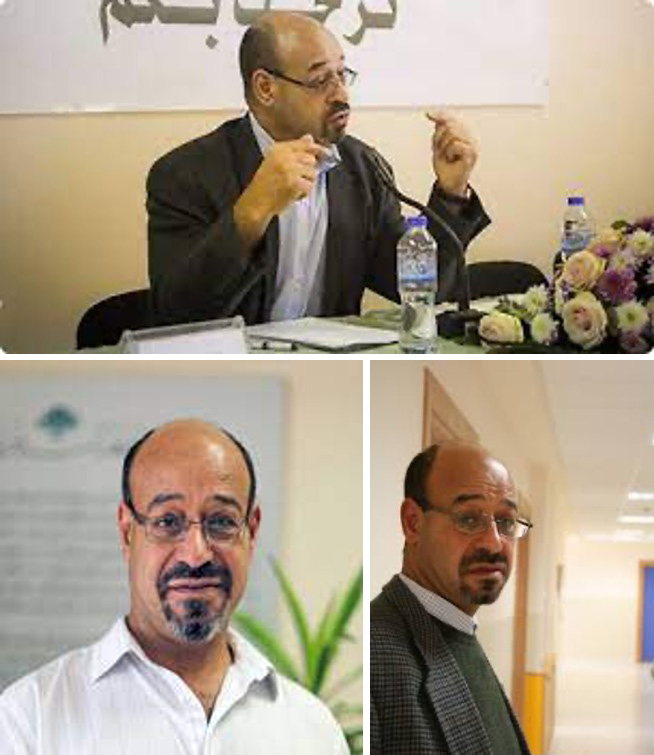
As Palestinian psychologists, clinicians, researchers, and educators we collectively come together to uplift the liberation narratives and work paved by Dr. Ibrahim Makkawi. We recognize the distance that separates us between barriers and borders on the map. However, we remember our ‘sumud’ (steadfastness) that transcends the weight of exile and occupation both locally and internationally. Our love for justice is rooted in our love for the land. We theorize from the flesh of those who touched us with their radical wisdom, such as Makkawi, and we further grow like our olive tree branches nourished with the memories and imprints of radical love on our hearts. The following is a memorial; a set of tributes to honor the life and legacy of Ibrahim.
This paper is intended as an introduction and a call for questioning psychological sciences. Western sciences, especially sciences that focuses on racial and gender “differences,” have served among the most colonizing influences worldwide. Frantz Fanon’s (1959) term “shameful sciences!” especially applies to social Darwinism and eugenics as forms of scientific racism, scientific sexism, and scientific imperialism. In this contribution, I highlight my struggles as a scholar to recognize these scientific narratives, to decolonize my own praxis as a scholar and a psychology clinician, as well as to address the long standing impact of these ideologies in the academy and society. I argue that In Science We (Should Never) Blindly Trust, and share my suggestions for ways to learn, name, and resist racist and sexist ideological sciences.
Modernity has disembodied and dissociated psychological subjectivity. It has significantly affected the capacity of individuals and communities to engage proactively in their worlds. Racism is part of modernity’s system of social control and is embedded as part of a Colonial Matrix of Power (CMP) (Quijano, 2000). Epistemic (epistemological) hegemony is an underlying assumption that is rarely called into question and is the glue that sustains the matrix. Community Psychology is based on assumptions rooted in the CMP, and its methodologies and conclusions must be called into question. This article is intended as an intervention to stop the ongoing harm of the CMP. Non-modernity is a starting point for challenging the CMP, to identify its false narratives and to recognize different epistemologies and ontologies. Non-occupied space is a condition for embodiment, the re-membering (re-integration) of the disembodied parts (Anzaldua, 2015). Out of this space emerge denormalized stories that simultaneously reveal how the matrix of power functions and re-member the village (i.e. epistemologies, ontologies, and social relationships delegitimized and silenced by conquest and violence).