Skip to main navigation menu Skip to main content Skip to site footer

Volume 12, No. 2

Published June 1, 2021

Articles

  1. Introduction to Part I of the Special Issue

    The proliferation of racially charged incidents in the United States, Europe, Australia and across the world (Dastagir, 2017; Harris & Bogel-Burroughs; Politi, 2016), along with surmounting hate crimes against women, immigrants, LGBTQ+ identified people, and ethnoreligious populations, such as Muslim and Jewish communities (Potok,  2017), have brought an insurgence of activism. The activism, along with the persistence of local, national and transnational community organizing efforts, grassroots mobilization, coalitional emergent strategies, and waves of social movements, have all been aimed at disrupting institutionalized racism and the assemblages of racialized colonial violence. The jaws of colonial power -- as well as colonialism and coloniality that manifest as anti-Black racism, nativism, and intersecting forms of oppression implicated in racialized violence -- must be disrupted and dismantled!

  2. Resisting the Coloniality and Colonialism of a Westernized Community Psychology: Toward a Critical Racial Justice Praxis

    The institutional violence we are now experiencing, coupled with historical and ongoing waves of oppression, is a result and continuation of the legacy of colonialism. The outward eruptions that we are seeing over the last years are a result of American and Canadian settler nation-states that have taken hold in North America but are now in decline. Yet, the perpetuation of imperialism and white supremacist ideologies via the academe and other noneducational entities reproduced through curricula, pedagogy, and institutional policies and practices must still be addressed. The discipline of community psychology (CP) is no exception. As a part of the imperialist empire, CP, a mainstream academic discipline born at the heart of the empire of the colonial ruling class, continuously asks: What can we do? We, the authors of this paper, are troubled by this question and respond with a question of our own: Can community psychology really be part of the solution if it does not acknowledge that it is part of the problem? Through the lens of five Indigenous, Black, and racialized scholar-activists, educators, and practitioners, we identify three community psychology principles and argue that in practice within Black and Indigenous communities, they are not sufficient. Further, we illustrate that, related to these principles, community psychology is situated within what is termed the industrial complex, and we elucidate the implications of this situating. Lastly, we offer a proposal for how we, as part of the academe and practice, can decolonize community psychology and move it forward to align with current liberation movements and Indigenous sovereignty.

  3. Here to Stay: How we Created a Movement Toward Decolonizing our High School

    A praxis and pedagogy, decoloniality can play a critical role in students’ understanding of systems of oppression and their role in creating systemic change. As decoloniality emphasizes the importance of undoing and unlearning, it is critical that a decolonial pedagogy (Buttaro, 2010; Lissovoy, 2010) provide students an opportunity to engage in these actions. One possibility that should be explored is how youth participatory action research projects-taught within a decolonial pedagogical curriculum- can be used in schools to enhance students’ understanding and commitment to the decolonial project (Cammarota, 2014, 2009; Morrell, 2008). Using autoethnography (Anzaldúa, 2002), the paper discusses the process that a group of Latinx high school students went through to create “Soy Yo” and draw upon decolonial theory to analyze how learning about decoloniality and YPAR led them to begin the process of decolonizing their school. The concludes with risks and rewards that these stakeholders encountered during this ongoing project.

  4. Colour Between the Lines: Self-determination and the Creation of Settings as Resistance to Structural Violence

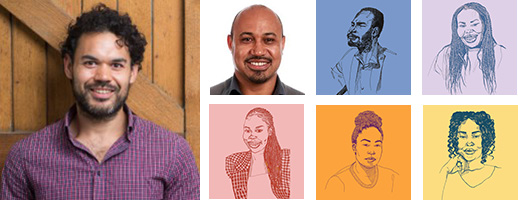
    For many people from communities of the African diaspora in Australia, raced-based discrimination through mechanisms of structural violence frames day to day lived experiences. Yet, while racialised and other forms of structural violence pervade the lives of black people and other marginalised groups, individuals and communities also resist and survive every day. Resistance and struggles for survival are evident in the creation of alternative settings that are important for affirming culture and histories, and for providing opportunities for a sense of community, consciousness raising, and constructing new and alternative narratives to those that pervade dominant cultural contexts. The focus of this paper is to examine the formation of a self-determined alternative setting within the broader context of race relations in Naarm/Birraranga (Melbourne). A secondary focus of this paper is to describe community engaged ways of working that were engendered by the setting, as university-based researchers collaborated with a collective of creative practitioners to document the project. The alternative setting examined is called Colour Between the Lines, a self-determined initiative comprising a collective of five creative practitioners from the African diaspora. We describe the emergence of CBTL as an enactment of racial justice through the self-determined activity that has emerged from a group of people who individually and collectively continue to be subjected to racialised structural violence. We suggest that CBTL can be understood as an alternative setting that further engenders important forms of resistance and community making, and that is shaped and constrained by social power relations. Thus, we argue the need as community-based researchers to work with and within communities, engaging in critical and collaborative forms of anti-racist and decolonial praxis to support the creation of such settings.

  5. Creating Change Agents: Teaching HBCU Undergraduates to Use Community-Based Research to Resist Racism

    The rise of a “colorblind” vernacular among young adults’ limits how they understand race and racism in ways that allow white supremacists ideologies to thrive.  In the United States, for example, immigration policies, policies and practices regarding criminal justice and policing, health and housing are often framed using Black and Brown people as a cautionary tale for failing policies or to squelch policies that promote redress from historical oppression—conflating issues with race. Additionally, young Black and Latinx adults understand race and racism within this conflation—often to their communities’ detriment.  Liberatory research methodologies offer opportunities for young adults, specifically undergraduates at Historically Black Colleges and Universities (HBCU) to catalyze and expand their efforts for community change and social justice. This descriptive study explores the process of using problem-based learning to teach undergraduates liberatory methodology and qualitative research methods to affect community change and social justice.  Short surveys with student researchers, their personal reflections and classroom observations illustrate how student researchers’ use qualitative research methods to examine how racism and sexism manifest in contemporary social problems.  Additionally, the data describe how student researchers perceive their ability to use skills to resist oppression and make social change and continue anti-racist work.

  6. What We Not Finna Do: Respectfully Collaborating with Skinfolk and Kinfolk in Black Feminist Participatory Action Research

    In this article, we (Black community social psychologists and community organizers with over 40 years of collaborative research experience) share the successes and challenges of using Black Feminist Participatory Action Research to actualize The Community Engaged Research Academy (CERA). CERA was a two-year multi-method project (utilizing community dialogues, focus groups, surveys, PhotoVoice, body mapping, and space mapping) aimed at teaching Bronx patients the language and ethics of research. CERA did not merely teach research methods for its own sake. It redressed research and schooling as sites of trauma and humiliation for Black, Indigenous, and People of Color (BIPOC) persons by nurturing the capacity of participants to develop research projects without researchers. We scrutinize the missteps and accomplishments of the CERA project to offer a tangible example of what attending to racial justice in community psychological inquiry looks like from all facets. Our imagined audience of readers is composed of burgeoning and veteran Black community psychologists, members of community-based organizations, and members of Institutional Review Boards (IRBs). We write to this audience mindful that analyzing what went wrong, and right would be instructive to academicians and practitioners, about how to ethically and respectfully collaborate with skinfolk and kinfolk. We start by interweaving a brief engagement in critical reflexivity about our prior experiences with Black participatory research as next generation Black scholars/organizers, which grounds our theoretical framework. We move to a discussion of community-academic partnerships (CAPs) within Black communities, where our engagement with the scholarship that has influenced our work refuses the traditional structure of a literature review. Historically, CAPs between Black professionals (researchers, doctors, nurses, educators, social workers, etc.) and Black communities have not always begun or ended well (Brown, 2017; 2019; Chilisa, 2009; Freimuth et al., 2001; Guishard et al, 2005; Guishard, 2009; 2015; Heyward, 2019; Jordan et al., 2001; Smith & Guishard, 2017; Suarez-Balcazar, Harper, & Lewis, 2005). Too often, the epistemes, theories, methodologies, and approaches to community engagement Black community psychologists learn, from largely whitestream institutions, are imbued with scientific racism, are extractive, and some likely with exploitative intentions. This past work has done more harm than good and has made our kinfolk distrustful of us and our intentions. We share our confrontations with ways of being, we had to leave behind and adopt to accomplish the CERA project. Some of the lessons we learned included centering Black community psychology, embracing critical race praxis, naming sacred moments that were excluded from the purview of research, and honoring the complex stories Black patients shared with us with hermeneutics of love (Guishard, 2016; hooks, 2001a; hooks, 2001b; Laura, 2013). We move to analyzing moments within the Community Engaged Research Academy that taught us much about the importance of healing-centered engagement. We offer: unwaveringly committing to loving all and not some Black folx, checking your professional humility before you wreck the project, being of service before making an ask, developing community agreements, articulating refusals, shared decision making, returning findings quickly, and shared ownership of the products of our research as ethical levers to readers. It is important to note that in addition to being evaluated by our institution’s IRBs, the CERA project was also constantly evaluated by members of a local community-based IRB. The Bronx Community Research Review Board (The BxCRRB) ethically assessed the extent to which we attended to the project’s focus and remained accountable to Black and Brown Bronx patients. We conclude by sharing the community agreements, template for our research presentations, and an evaluation tool we developed, with the BxCRRB, with hopes that they: 1) will expand and build upon critical race community psychological interventions, 2) can be reused and remixed by other CAPs between Black community psychologists and Black communities.
  7. A Photovoice Project for Ethnic Health Justice: Reflections from Roma Communities in Seville, SpainA Photovoice Project for Ethnic Health Justice: Reflections from Roma Communities in Seville, Spain

    Roma are Europe’s largest ethnic minority and despite their national citizen status, 80% live in extreme poverty and have a much worse health status than their non-Roma counterparts. European institutions have identified the institutional discrimination targeted at Roma communities—antigypsyism—as the underlying cause of the violation of their rights (European Union Agency for Fundamental Rights, 2018). Policies, practices and societal attitudes contribute to maintaining the status quo. From a community psychology perspective, we understand antigypsyism as institutional discrimination that needs to be addressed by creating processes with Roma communities that empower them to resist against this systemized oppression. Photovoice creates critical knowledge, increases individual skills to gain capacity to advocate and creates cohesion among oppressed groups to develop strategies for action (García-Ramírez et al., 2011). Thus, we propose that Photovoice can serve as a liberating process at the individual and community levels when utilized for advocacy. In this paper we present results of one aspect of RoAd4health (2016-2019), a project we carried out with Roma neighbors in Seville, Spain. The project aimed at developing advocacy processes in three at-risk, predominantly Roma neighborhoods to ensure the implementation and evaluation of Roma health policies through participatory action research (PAR). Here we focus on the potential of Photovoice to serve as a liberating process to resist antigypsyism. (Wang & Burris, 1997). In order to understand the individual and community impact of Photovoice for advocacy, we interviewed four of the Roma neighbor participants. Our analysis of the interviews resulted in two overarching themes from the citizen empowerment model (Kieffer, 1984): (1) From lack of consciousness to era of entry; (2) Achieving critical consciousness in the era of commitment; the second theme was divided into three subthemes, components of critical consciousness (Watts et al., 2011): (1) Critical reflection; (2) Political efficacy; and (3) Critical action. Overall, the Roma neighbors referred to the Photovoice as a method that instigated a conscientization process and helped gain commitment towards social justice actions, also reflected in actions following the Photovoice study. These results confirm that Photovoice as advocacy can contribute to individual empowerment and contribute to meaningful change towards community transformation to challenge antigypsyism.

  8. Politicized Healing: Addressing the Impact of State-Sponsored Violence

    From 1972 to 1991, the Chicago Police Department (CPD), particularly CPD Commander Jon Burge, systematically tortured over 120 predominately African-American men into false confessions for crimes that they did not commit, resulting in several decades of incarceration for many of these men.  After years of activism, in May 2015 the Chicago City Council offered an unprecedented response to oppressive and anti-black racism demonstrated by the Chicago Police Department by approving an ordinance to provide reparations to those harmed by racially-motivated law enforcement violence.  The Reparations Ordinance included the creation of a community center informed by the needs of survivors of police torture. This paper explores the concept of politicized healing as a method to address racialized trauma, providing a case study and discussing the impact of race-based police violence and key aspects of the model, including how this can be supported for individuals and communities impacted by other forms of state-sponsored violence and oppression. 

  9. Passing the Torch: The Communal Roots Of Intergenerational Messaging

    Intergenerational messaging has been shown in previous studies to play a pivotal role in providing continuity to knowledge generation in Black life, particularly as related to passing essential knowledge of cultural, social, spiritual and practice. An examination of the ways Black maternal activists perceive intergenerational messaging as supporting their work as organizers is still in question. This study fills this gap by examining the forces that keep the hands of Black maternal activists steady as they guide the threads of activism for the next generation of liberators. Even as Black maternal activists are guides themselves, intergenerational messaging establishes the ways they are also guided by others. This construct is central to African-centered thought and practice within Black community life. Intergenerational messaging has a potential role to play in shaping the perceptions and actions of Black maternal activists. The question of what messages are perceived to be essential to Black maternal activists and the ways Black maternal activists engage to make meaning of their perceptions is also explored. This study centers the lived experiences of Black maternal activists living and working in Chicago’s west side. Through semi-structured interviews with ten Black maternal activists ages18 years and older, this study uses a phenomenological approach and case study design to discover key findings related to intergenerational messaging. Key findings are that Black maternal activists view teachers as pivotal intergenerational messengers and incorporate themes of remaining steadfast, maintaining a clear focus on purpose, practicing inclusivity and maintaining a spiritual foundation to their work as fundamentally important messages received from ancestors and community elders to inform their organizing work. Intergenerational messaging is being introduced through this article to be considered part of our practice work as community psychologists.