Skip to main navigation menu Skip to main content Skip to site footer

Volume 10, No. 1

Published February 9, 2019

Articles

  1. INTRODUCTION TO THE SPECIAL ISSUE: Developing Undergraduate Community Psychology Pedagogy and Research Practice

    Edited by Eylin Palamaro-Munsell, Lauren F. Lichty, and Jen Wallin-Ruschman, this two-volume special issue, “Developing Undergraduate Community Psychology Pedagogy and Research Practice,” highlights the transformative potential of undergraduate community psychology education and research.  Building on experiences practicing community psychology in primarily undergraduate settings, this special issue is designed to serve as a guide for fellow practitioners and as a call to our field. In this introduction, we present key points from each manuscript and highlight cross-cutting themes such as community psychology pedagogy-environment fit and professor-student dynamics that impact practice. We conclude by offering concrete opportunities and an invitation to join us in imagining a Society for Community Research and Action that values and supports undergraduate-focused community psychology pedagogy, research, and practice.
  2. Bridging Disciplines to Teach Community Psychology: Notes from a Transcommunal Classroom

    This paper explores how an interdisciplinary pedagogy can amplify community psychology (CP) values in undergraduate education. Sociologist John Brown Childs’ (2003) concept of transcommunality, which emphasizes working across difference through shared practical action via respect, understanding, and communication, illustrates how bridging disciplines can transform CP classrooms. This framework acts as a catalyst for teaching CP values of empowerment, citizen participation, wellness, diversity, sense of community, and social justice (Kloos, Hill, Thomas, Wandersman, Elias, & Dalton, 2012). A transcommunal approach grounded in power, privilege, and oppression are further examined to explore possible class assignments and activities to facilitate student interest and thinking about CP values in relation to a transcommunal society. The paper concludes with suggestions and an assessment of the (dis)advantages of these activities for instructors.

  3. Local Lessons: Teaching Place-Based Social Justice through Historical Case Analysis and Service-learning

    Community-based Service Learning (CbSL) is a demonstrated pedagogical method for integrating theory and practice, transgressing ivory tower walls, and offering undergraduate students early exposure to real-world settings in which many wish to engage (Bringle & Duffy, 1998; Hofman & Rosing, 2007).  Teaching the history of specific social movements has been widely lauded among some educators as a component of education (Teaching Tolerance, 2018).  While there have been a limited number of models proposed for integrating historical case histories into service learning (e.g., Wade, 2007), none to date have incorporated specific community psychology features such as the Competencies for Community Psychology Practice (Dalton & Wolfe, 2012).  This article will provide a four-step curricular design process for identifying local historical cases and developing pedagogical strategies for teaching students how to apply local historical lessons in addressing contemporary issues via service learning.  Using the historical case illustration of northern California’s ‘Redwood Wars’, the article demonstrates how historical local movements and contemporary social action can root students in their communities while learning important community psychology principles and concepts.

  4. A Study on Undergraduate Community at a Historically Black College and University (HBCU)

    Historically Black Colleges and Universities (HBCUs) and the field of community
    psychology share a similar mission; they both serve individuals from backgrounds
    impacted by racism or other structural inequalities. Consequently, undergraduate
    learning environments at Historically Black Colleges and Universities (HBCUs) offer
    settings for applying community psychology pedagogy, discussing issues related to
    social justice, and exploring the empowerment of emerging adults. This article presents a case analysis of an undergraduate psychology course that models community psychology pedagogy implemented at an HBCU in the Southeastern region of the United States. The review of course syllabi, a faculty reflection, and a focus group of undergraduate students at the HBCU revealed strengths and lessons learned in course implementation. Reflections underscore the value of community psychology pedagogy; the discussion in this paper advocate for the increased integration of community psychology in undergraduate courses, particularly at HBCUs.

  5. Social Problems are Social: Empirical Evidence and Reflections on Integrating Community Psychology into Traditional Curriculum

    The paper will describe the development and impact of a course that exemplifies the principles and values of community psychology, but does so outside the bounds of a community psychology program or concentration in a large, diverse, public university. The class, Community Engagement for Social Change, has two aims: to teach undergraduates that social problems have social causes, and to engage students in a range of social problem-solving approaches that incorporate that understanding. It accomplishes these aims by introducing a “multi-level analysis” of social problems, using a case study of the social problem of poverty, and requiring that all students complete 20 hours of service in community organizations. The development of the class required strategic thinking and significant retooling in order to attract and promote learning across a broad range of students. It has now been offered each semester for seven years, and has evolved into an opportunity for the first author and her graduate students to integrate social justice-oriented teaching and research. For the past three years, the authors have been engaged in a longitudinal project evaluating the impact of the class on student outcomes. This paper provides an overview of this course, and describes lessons learned from two sources: (1) the experience of teaching and refining the class, and (2) the longitudinal dataset collected from students who did and did not take the course. Data show that the class is effective in shifting attitudes both specific to poverty and more generally to social problems. Results also show that implicit bias did not shift over the course of the semester, and that individual and systemic attributions for social problems are only moderately related. We hope that sharing our experience is useful to those interested in similar coursework in other institutions that lack an explicit focus on community psychology.

  6. Undergraduate Community Psychology Research Practice: The Story of the Community Narrative Research Project at Rhodes College

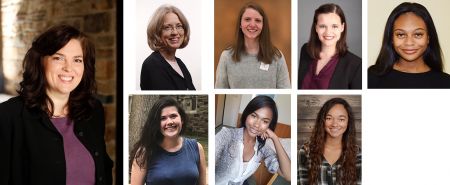
    The Community Narrative Research Project (CNRP) is an undergraduate action research initiative focused on undergraduate students’ experiences of community engagement over time. At the center of the project is the collection and analysis of narratives written by Bonner Scholars at Rhodes College over their four years working in Memphis communities as part of their scholarship. This paper describes the participatory community research model that has evolved in the CNRP, including the voices of undergraduate student leaders in the Bonner Scholars program and undergraduate researchers in developmental and community psychology. We focus on the community of practice that has emerged in our team, and how this community grounds our interpretive and longitudinal analysis of the narratives we examine. Our discussion of the data analysis process, including students’ engagement with coding and reliability, illustrates the methodological repertoire that undergraduates develop in a community of practice and that is scaffolded by more experienced faculty and senior student researchers. Undergraduate students build the community psychology research and practice competencies that are often understood to be part of graduate student development. We are able to ask creative research questions informed by our unique and shared experiences, as well as our deep understanding of the data. We feature individual accounts by each of the six student authors to illustrate our research practice and share the experiences of team members. We offer practices that may be adapted to other undergraduate research contexts, and we discuss challenges and supports needed to sustain participatory action research with undergraduate students. 

  7. Sharing Strengths and Struggles in the Classroom and Beyond: Results from the Teaching Community Psychology Survey

    Research on the state of community psychology (CP) in undergraduate education is scarce. This lack of understanding within the discipline hinders the ability to learn from CP educators’ experiences and disseminate effective practices. To begin to address this gap, the current study distributed a survey to CP educators located within the United States, exploring the following questions: 1) what are the demographics, locations, and roles CP-related educators occupy, 2) what are the biggest challenges educators encounter in and outside of the classroom when teaching CP-related content, and 3) what additional resources/supports do educators need from both their institution and the larger professional field to deliver high quality CP educational experiences. Responses from participants (N=44) highlight diversity in educators’ positions and geographic locations, as well as the prominence of a CP focus across departments. Applying an ecological framework, findings indicate that educators encounter multiple systemic challenges while teaching CP-related content at the departmental, institutional, and local community levels. At a national scale, the political climate regarding public education also contributes to instructional barriers. Assessment of resources regarding needed support systems and action within the field are provided. Lastly, we stress the value of future research concerning faculty teaching undergraduate CP courses.