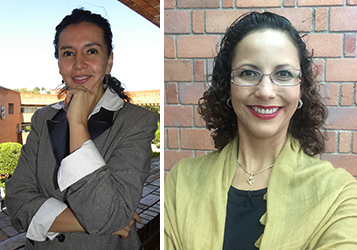
Angélica García Ojeda , Gabriela Ruíz González
El sentido de comunidad puede ser el motor para desarrollar cambios positivos en la dinámica familiar y relacional con los hijos en pro del bienestar subjetivo para los participantes. El presente estudio se llevó a cabo en la Barraca el Cilantro ubicado en Santa Fe en la Cd. de México, a partir de un foro comunitario se evaluó un grupo de madres de familia, quienes reportaron una serie de preocupaciones, por ejemplo: sus hijos después de secundaria dejan de estudiar, se sienten autosuficientes y dejan de respetar la autoridad de las madres, pero lo más grave es que comienzan a hacer vida fuera de casa integrándose, en la mayoría de los casos al vandalismo de la comunidad. Por lo que su mayor preocupación tenía que ver con la pregunta ¿qué hacemos mal, cómo es que los educamos que llega el momento en que no nos escuchan? Aunado a ello, posteriormente se inician otros problemas como: desintegración familiar, dificultad para establecer límites, y pérdida de convivencia familiar. La regla de inclusión fue que fueran madres con hijos en edad escolar, previa a la etapa que ellas reportaban como problemática. Usando técnicas tomadas de la arte terapia, se trabajó durante un taller de 15 sesiones, con un grupo de 10 madres, quienes se conocían por primera vez. El objetivo fue sólo darles contención y que encontraran posibilidades de acción. A través de una metodología cualitativa integrada por comunidades de aprendizaje y con ayuda de la técnica de narrativa se fue construyendo en el grupo lazos interpersonales caracterizados por: actitud de pertenencia, reciprocidad, sentido de comunidad y una relación interna de funcionalidad; lo que las llevo a transpolar estos sentimientos al exterior. Los resultados mostraron que aunque al inicio no había una clara comprensión de lo que significa vivir en comunidad, las participantes a través de las narrativas de sus artes fueron integrando un relato diferente de sus sucesos de vida cotidiana, dándoles un significado menos traumático y más positivo; fueron entendiendo su dinámica familiar y relacional con lo hijos; así como lo que significa vivir en comunidad, construyendo un nuevo sentido de vida familiar y comunal; con ello iniciaron una serie de cambios actitudinales y conductuales en 3 de sus contextos cotidianos: como mujer (en el ámbito personal), como mamá (en el ámbito familiar-social) y como representación social de madre (en el ámbito comunitario y cultural). Se llegó a la conclusión de que tener un sentido de comunidad es algo que se construye y es factor clave para el bienestar de la unidad familiar.
Sense of community can be the energy for making positive changes in a family and its relational dynamics with children in favor of subjective well-being. This study was done in the Cilantro’s Gully community, located in Santa Fe, Mexico, where a group of mothers were evaluated through a community forum. They reported a number of concerns, including that their children after high school stop studying because they feel self-sufficient, they stop respecting parental authority, and most seriously, they start to live outside the home potentially finding their way to vandalism in the community. Their biggest questions were 1) what do we do wrong and 2) how do we educate them that the time comes when they do not listen to us? In addition, other problems such as family disintegration, difficulty setting limits, and loss of family interaction were mentioned. The rule of inclusion was they were moms with children of school age. Using techniques adapted from art therapy, a 15 session workshop was conducted that included the participation of 10 community moms. The objective was to give them contention and find possibilities for action. Through a qualitative methodology integrated by learning communities and with the help of the narrative technique, diverse interpersonal bonds were built in the group, characterized by: an attitude of belonging, reciprocity, a sense of community, and an internal relationship of functionality. The results showed that before starting the workshop there was no clear understanding of what it means to live in community or have a sense of community. The participants, through the narratives of their arts, integrated a different story of their daily life events, giving them a less traumatic and more positive meaning; they developed a better understanding of their family dynamics and relational with the children; as well as what it means to live in community, building a new meaning to their family and communal life; with this they initiated a series of attitudinal and behavioral changes in three of her daily contexts: as a woman (in the personal sphere), as a mother (in the family-social environment) and as a social representation of mother (in the community and cultural).It was concluded that having a sense of community is something that is built and is a key factor for the well-being of the family unit.