Skip to main navigation menu Skip to main content Skip to site footer

Volume 4, No. 3

Published October 10, 2013

Articles

  1. The Living Room, a Community Crisis Respite Program: Offering People in Crisis an Alternative to Emergency Departments

    Objective: To describe The Living Room, a community crisis respite center that offers individuals in crisis an alternative to obtaining services in an emergency department (ED).
    Methods: This article describes the problems individuals in a mental health crisis may encounter in traditional EDs and explains how The Living Room addresses these problems.  The Living Room’s development, setting, staffing and procedures are described in order to promote increased use of this type of program.

    Results: In its first year of operation, The Living Room hosted 228 visits by 87 distinct individuals (termed “guests”).  Guests were deflected from EDs on 213 of those visits – a 93% deflection rate.  These deflections represent a savings of approximately $550,000 to the State of Illinois since guests of The Living Room are overwhelmingly individuals with Medicaid or no insurance of any kind.  On 84% (n=192) of the occurrences in which guests were deflected from EDs, they alleviated their crises sufficiently to decide to leave The Living Room and return to the community.  These guests reported an average decrease of 2.13 points on the Subjective Units of Distress Scale.

    Conclusions: Community crisis respite centers such as The Living Room represent an important alternative to EDs by remedying many criticisms of traditional EDs made by individuals in crisis. Outcomes from The Living Room’s first year of operation suggest that community crisis respite centers are cost-effective, effective in helping many individuals alleviate crises, and have the potential to decrease the use of EDs for mental health crisis.


  2. Recovery: Re-establishing place and community resilience

    The purpose of this review is to suggest steps in the recovery process to help victims re-establish place and build community resilience via an on-going, adaptive resilience assessment. The methodology consists of a review of the literature, case studies from recent disasters in the United States, and the authors’ prior experiences. The article demonstrates place and adaptive resilience as two integrated concepts that represent the desire of disaster-affected people to achieve their recovery.

  3. Heroes and Martyrs Against Alienation: Growing up as Puer and Puella in Postmodern Society

    An innovative art intervention program named Art Works was offered to 47 Latino youths (ages 12-18) who were coping with chemical dependency and/or mental health illness. Art Works provided youth with a creative outlet to use art as a means for self-expression, self-awareness, and community involvement. A Jungian approach to youth development was applied by which youth participants were empowered to become aware of their inner dialogue with and about youth and art was used as a vehicle for inclusion of the youths’ voices. This intervention promoted movement flow into the deeper knowledge and understanding of the archetypes at play, those existing in the colonizer/oppressor (the adult, the Senex) and those existing in the colonized/oppressed (the youth, the puer and puella contemporaneous), as well as into their interplay and resolution. Outcomes were measured by applying multiple methods and instruments: a youth empowerment pre-post test, progress/group notes, personal journals, art products, behavior observations, and the application of random drug tests. The participatory program evaluation engaged youth in continued critical self-reflection. The quantitative and qualitative findings suggest that participants manifested increased self-awareness, improved positive peer associations, and reduced drug abuse as a result of their participation in the program. At the conclusion of the program 64% of the participants tested negative in random drug tests. The youth art products showed a dramatic change in their content, namely, from obsessive drug related representations to colorful, abstract, and futuristic images. The implications for art-based interventions and related youth development are discussed.

  4. The Evolution and Growth of the Eco-Community Psychology Conferences

    In the 1960s and 1970s, community psychologists argued for shifting traditional approaches of treating mental illness (e.g. institutionalization, psychotherapy, etc.) toward prevention and more active involvement through community interventions (Bennett et al., 1966). In light of these events, researchers and students committed to the emergent field of community psychology developed several channels to exchange resources and provide support among one another over the past decades. This paper describes the annual Ecological Community Psychology Conference (Eco), which was created by professors and students in 1978, as a vehicle to promote exchanges of ideas and support among community psychology graduate students, community activists, and academics.

  5. Implications of Community-Based Research for Professional Psychology Training: Reflections from Two Early Career Psychologists

    Community psychology (CP) has valuable philosophical perspectives and methodological approaches to offer the wider discipline of psychology, yet it remains underappreciated and often invisible in most professional training programs in psychology, including those programs intended to train in the areas of clinical, counselling, school, and neuropsychology. Community-based research (CBR) is one particular methodological approach within CP that has the potential to enhance standard research training experiences, as well as to enhance professional psychology training more generally. In this paper, we discuss the professional psychology training implications of CBR approaches, highlighting potential changes to the existing training structure that could facilitate wider access to training in CBR, and thereby enhance the competencies of professional psychologists. We also critically reflect on our experiences conducting our own CBR dissertation projects while becoming trained as clinical psychologists. We encourage other trainees, professional psychologists, and training programs to consider the merits of incorporating CP perspectives and approaches into their work.

  6. International Perspectives on Intimate Partner Violence

    Intimate partner violence (IPV) is a serious global public health concern. The goal of this paper is to provide, side-by-side, international perspectives on the problem(s) of IPV and solution(s), with a particular emphasis on community psychology research and practice. Three perspectives are shared spanning the globe from the Pacific (Hawai'i) to the Atlantic (Puerto Rico). While one article uses a more traditional focus on violence against women and domestic violence among adults, two articles focus on teen dating violence. This collection of invited articles is based on a prior presentation made at the IVa Conferencia Internacional de Psychologia Comunitaria held in Barcelona 2012. Each set of authors has presented their unique study in a separate brief article, while the full paper concludes with a brief summary and implications for international action at the local level.

Editor's Note

SCRA Mini Grant Spotlight

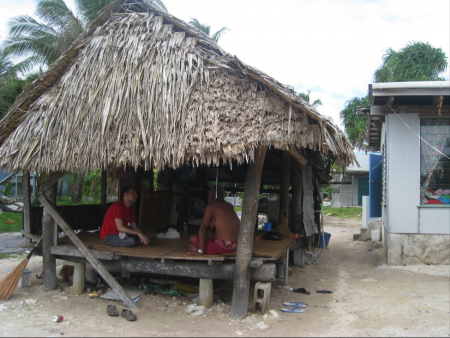
  1. Community and Cultural Responsivity: Climate Change Research in Tuvalu

    The Community Mini-Grant was founded in 2010 with the intention of supporting small, time-sensitive community-based projects that are consistent with SCRA’s mission, principles, and goals. We are happy to support the great work being done by SCRA members and their community partners, and even happier to be able to highlight examples of this work and share them with the GJCPP readership.  Below, Dr. Laura Kati Corlew provides us with insight into research on the community and cultural impacts of climate change in Tuvalu, as well as a description of the impact that Community Mini-Grant funding had on implementing a culturally responsive research and dissemination process.