Skip to main navigation menu Skip to main content Skip to site footer

Volume 2, No. 2

Published December 15, 2011

Articles

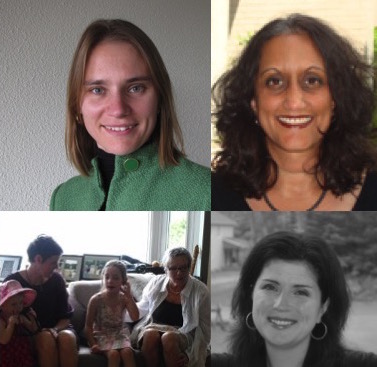
  1. And Then What? Four Community Psychologists Reflect on Their Careers Ten Years After Graduation

    According to a recent survey of North American Community Psychology (CP) graduate programs, over half of CP graduates find employment in community practice (Dziadkowiec & Jimenez, 2009). That trend has been on the rise over the last few decades. In Canada, Nelson and Lavoie (2010) concluded that, compared to 25 years ago, “there is now a sizable number of community psychologists who are primarily practitioners and applied researchers” (p. 84). In this paper, we provide a glimpse into the career paths of 4 Canadian CP graduates, and describe how our CP training prepared us for our lives after graduation. We completed our master’s degrees in CP at Wilfrid Laurier University (WLU) (Ontario, Canada) approximately ten years ago. Two of us went on to obtain PhDs while the other two went straight into the workforce. We represent diverse professions: research/evaluation consultant in a hospital setting, government policy analyst, independent researcher/consultant, and Canadian diplomat. Although several of us have worked in academia, we are now primarily community practitioners. We are also mothers and active members of our communities. We will explore what attracted us to the CP program and how we have applied CP values and skills in our respective careers. By providing real-life accounts of what CP graduates do after their training, we hope to demonstrate the value that the program has had in our professional and personal lives, as well as to contribute to the ongoing discussion on building relevant CP programs.
  2. Creating and Sharing Critical Community Psychology Curriculum for the 21st Century: An Invitation

    Authors invite dialogue on critical community psychology graduate curriculum, sharing an approach that draws from depth psychologies, liberation psychologies, ecopsychology, and indigenous psychologies. Grounded in a participatory action model of research and ethics, students, alumni, and faculty pursue collaborative community and ecological fieldwork and research, crafting a postmodern critical community psychology for the 21st century. Authors call for reflection on the issues that mitigate against individual and community well-being that must be addressed in community psychology programs, and the concomitant theories, capabilities, and sensibilities to address them that need to be nurtured in students and educators. They call for us to engage students through transformative learning approaches and critical pedagogy in emancipatory community and ecological fieldwork and research.

  3. Community Psychology Values-Driven Pedagogy: The Foundation for Empowering Educational Settings

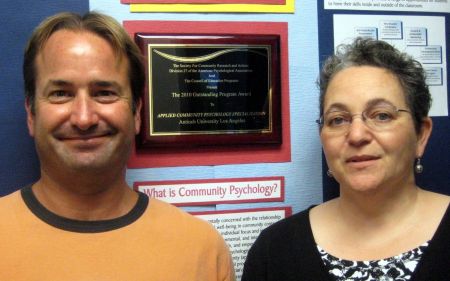
    This paper discusses the role of community psychology values-driven pedagogy as the foundation for the enactment of an empowering educational setting for community psychology graduate students. Using the Applied Community Psychology Specialization at Antioch University Los Angeles as a model, curricular and extracurricular program elements that foster student well-being are identified. A model of an empowering educational setting is presented. Explored are intrapersonal, interactional, behavioral, and longitudinal empowerment as they relate to student and faculty roles. Student empowerment outcomes and indicators of student learning are highlighted with case examples.

  4. Where in the World is My Community? It is Online and around the World according to Missionary Kids

    Having physical access to a community and having a sense of community is not always an easy option for Third Culture Kids (TCKs) who live in a culture other than their parents’ native cultures such as missionary families and government and non-governmental agency workers located in various countries around the world. One TCK stakeholder (a co-author) decided to practice creating community and research by conducting a participatory action research project with a goal of engaging a subgroup of TCKs called missionary kids (MKs) to meet online and to create a sense of community. Participants (N = 20) ages 16 to 40 joined website discussions and influenced how the website was developed and operated in addition to allowing their online postings to be used as data to study sense of community among MKs. Data were analyzed using McMillan and Chavis’s (1986) four dimensions of sense of community: membership, bi-directional influence, needs fulfillment, and shared emotional connection. Findings show that MKs connected through the Internet, developed a sense of community, influenced how the website functioned, took control of online community regulations and norms, and provided social support for one another. The website started in 2004 with two members and in 2011 had 1801 community members. Findings have implications for expanding theories of sense of community and for practices to create and sustain online communities.