Skip to main navigation menu Skip to main content Skip to site footer

Volume 4, No. 2

Published June 16, 2013

Articles

  1. Special Issue on Community Psychology and Social Policy

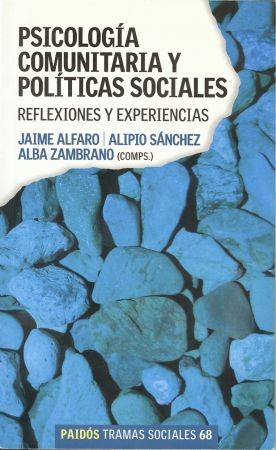
    Community psychologists working in the policy arena are uniquely situated to improve the quality of life for individuals, communities and nations. Unfortunately, we know relatively little about the policy-related work community psychologists conduct in different parts of the world. This special issue represents a beginning foray into this area, encompassing six articles, one information brief, one commentary, and two book reviews describing the policy-related work of community psychologists in multiple nations across four continents. The articles in the special issue are based on presentations in two separate symposia conducted at the Fourth International Conference of Community Psychology (Barcelona, Spain, June 2012). The two symposia were “Psicología comunitaria y políticas sociales: Antecedentes, límites y posibilidades” (Jaime Alfaro, coordinator), and “Influencing social policy: Community psychology perspectives from four continents” (Ken Maton, coordinator).

  2. La co-gestión de Políticas Públicas Sociales entre Estado y sociedad civil: El aporte de la Psicología Social Comunitaria a la construcción del diálogo entre actores diversos

    This paper presents the contribution of Social Community Psychology (SCP) to the development of understanding and participation in the context of  social public policies (SPP) that are co-managed between the State and civil society. We provide an analysis of the complexity of the socio-political setting, and the importance of considering psychosocial and subjective processes when aiming to strengthen the participation of civil society organizations (CSOs) and the population targeted by the policy.

    We present an intervention developed by the Faculty of Psychology at the University of the Republic (Uruguay) in a comprehensive care program for early childhood in poor areas, carried out by the provincial government of Montevideo in partnership with CSOs. We describe and analyze the construction of the problem of the intervention and develop the methodological strategy carried out in that context, the techniques used and the results obtained, after explaining the concept of participation and co-management.

    In keeping with the construction of the problem, the methodological strategy was formulated following three purposes: (1) to integrate the different voices that constitute the program, (2) to build dialogic spaces, and (3) to alternate a look a the whole program with a focus on unique processes that were deployed in the various early education centers.
    We discuss techniques, tools and materials to promote collective and participatory work, to socialize and discuss the findings, conclusions and questions about participation in early education centers.

    We conclude that the contribution of the SCP to SPP requires consistency between an analysis of the complexity of the field and an intervention strategy that is flexible and dynamic. When there is an interest in developing a social policy that will strengthen participation and democracy, the association with potential contributions of SCP is favored. However, this does not mean the absence of contradictions and conflicts in the process, some of which are expressions of the stress of a leftist government within the framework of a capitalist state.

    Resumen
    En este artículo expongo el aporte de la Psicología Social Comunitaria (PSC) a la comprensión y al desarrollo de la participación en el marco de las políticas públicas sociales (PPS) que son co-gestionadas entre el Estado y la sociedad civil. Analiza la complejidad de ese escenario socio-político y la importancia de considerar los componentes psicosociales y los procesos subjetivos cuando se pretende fortalecer la participación de las organizaciones de la sociedad civil (OSC) y de la población a quien se destina la política.

    Presento una experiencia que consiste en una intervención desarrollada desde la Facultad de Psicología de la Universidad de la República (Uruguay) en un programa de atención integral a la primera infancia en sectores de pobreza, llevado adelante por el gobierno departamental de Montevideo en convenio con OSC. Describo y analizo la construcción del problema de la intervención y como se desarrolla la estrategia metodológica llevada a cabo en ese contexto, las técnicas empleadas y los resultados obtenidos, luego de exponer la concepción de participación y de co-gestión de la que se partía.

    La problematización del pedido inicial conduce al abordaje de los distintos aspectos psicosociales involucrados, incoporando paulatinamente a los distintos actores del Programa. En consonancia con la construcción del problema, la estrategia metodológica se fue formulando siguiendo tres propósitos: (1) integrar las distintas voces constitutivas del Programa, (2) construir espacios dialógicos y (3) alternar una mirada de la dimensión del Programa en su conjunto con la focalización en los procesos singulares que se despliegan en los distintos centros de educación inicial.

    Se crearon técnicas, herramientas y materiales para promover el trabajo colectivo y participativo, para socializar y discutir los resultados, las conclusiones y las interrogantes acerca de la participación en los Centros de Educación Inicial.

    Concluyo que la contribución de la PSC a las PPS, requiere de una coherencia entre un análisis de la complejidad del campo de acción y una estrategia de intervención  flexible y dinámica. Cuando existe desde la PPS la voluntad de profundizar la participación y la democracia, la asociación con los aportes potenciales de la PSC se ve favorecida. Sin embargo, esto no significa ausencia de contradicciones y conflictos en el proceso, algunos de los cuales son expresión de las tensiones de un gobierno de izquierda en el marco de un estado capitalista.


  3. Community Psychology and social policies: Actors and institutions

    This article seeks to analyze the relationship between community psychology and social policy, given the growth in interest in their interaction, both in in terms of the issues covered (from mental health to social problems) and the regions concerned (North America, Europe, and Latin America).

    The article describes the experience of community psychology contributing to the phases of the social policy cycle; the effects of social policy on the development and institutionalization of community ps ychology in the university, as well as the risks and tensions of this relationship for our discipline. Based on an analysis of the complexity of the contribution of community psychology to support the social policy process, the article proposes a framework for understanding this relationship that considers: a) the different institutional and regulatory frameworks that define policy, and the multilevel dynamics within which these are constructed, b) the role of multiple actors (governmental, professional, social and academic), and their influence, struggle, forms of interaction-negotiation and coalition, cultural differences and interests, as well as c) the  process of encounter and debate among interpretations and frames of meaning, structured as contexts, or open stages in which forces and political options the definition of problems and their solutions has particular importance.

  4. Multiple-level Analysis as a Tool for Policy: An Example of the Use of Contextualism and Causal Layered Analysis

    In 1970 Scribner described four types of community psychologists. Despite social change being a common theme, the four types were differentiated by the extent to which they were inside government and organisations or outside, agitating for change. Community psychology and policy change appear to be implicitly connected. Despite this, engagement of community psychologists in policy change has proven to be minimal. Distinctions between first (cosmetic) and second order (systemic) change (Watzlawik, Weakland & Fisch, 1974) reflect the intractability of fundamental change due to deep systemic cultural influences, and should act as a motivator for community psychologists in the policy arena. We argue that psychology’s failure to adopt a multiplicity of epistemologies, in particular a contextualist epistemology, has meant that psychology, and particularly, community psychology has had limited impact. Further, we argue the need to consider community worldviews and culture, in general, if we are to engage more fully in policy development and implementation. Contending with the social issues relevant to policy settings requires an articulation of the worldview and cultural context. Causal layered analysis, a futures methodology, has been adopted to allow a reflective and contextual approach to policy implementation and involves a structured layered deconstruction of social issues. An example of this approach will be highlighted with its application to the implementation of sustainable Australian agricultural policy in the face of climate change. What is revealed is a psychological paradox involving the general endorsement of sustainable policy alongside cultural impediments to its adoption. Community psychologists have a natural and important role to play in policy formulation, given our epistemologies, methodologies and motivation for genuine and transformative social change.

  5. The geometrical headache of French policies: Can vertical cultures be tilted horizontally?

    French governmental policymaking operates by top-down processes of decision-making, jeopardizing all forms of power transfer and social transformation. The technocratic structure of public health promotes cost-effective, evidence-based curative and preventive strategies, focusing on individuals rather than on contexts. On the other hand, field workers, whose theoretical orientation is based mainly on psychoanalysis and individual clinical practices, are as reluctant as policymakers to move towards community practices and power sharing processes.

    This paper is based on our work as a community psychologist, working in a French governmental agency, and as a sociologist of mental health studying the processes of political decision-making in regard to preventive public health policies. The objective is first to reflect on the distinctive aspects of governmental policymaking in our country, and second, to underline the obstacles to and facilitators of success in our social policy-related work.

    In our context, we propose that community psychologists act in order to (1) apply social science knowledge and contextualize actions, with the intention to help political decision-making by including environmental, social and community variables in the definition of human processes and behaviors; 2) criticize the top-down decision-making process and the focus on the individual, by developing an interactionist model of knowledge evaluation, which would allow vertical understanding and decision-making to tilt horizontally, and 3) support people to create legitimate knowledge from their contexts rather than empowering them through psychological interventions.

  6. A Community Psychologist’s involvement in policy change at the community level: Three stories from a practitioner

    Influencing social policy is a natural part of the everyday activities for community psychology practitioners working in partnership with communities. Most dilemmas faced by communities not only have programmatic solutions but looking at the root causes of the issue we can also see the structural policy issues that require change. Often our task is to build the capacity of the communities to become effective advocates involved with local office holders on issues requiring policy change. Community psychologist practitioners frequently become involved in the world of policy. It is the reality of how one form of change occurs in communities. Small “p” policies can mean negotiating the tricky waters among institutional players in a community. Capital “P” policies are illustrated by community psychologists involved in advocating for specific policy or legislation on crucial issues. Three examples presented in this paper illustrate the range of possibilities available for engaging in social policy change. They include building healthy communities coalitions, focusing in on a policy agenda on a specific issue (health care access), and building the capacity of local communities to address social change issues such as systemic racism. The paper encourages more community psychologists to write of their experiences in the pursuit of social policy change at the community level in order to learn how to be most effective in these roles and to learn about the range of possibilities.

  7. In and against social policy

    In order to consider the potential relationships between community psychology and social policy it is necessary to consider the contradictory nature of social policy in the modern State.  Following the tradition of critical social policy analysis established through the work of British writers on Critical Social Policy from the late 1970s onwards, social policies will be considered as a hybrid between the role of the State in the service of capital and the realisation of emancipatory struggles by a variety of subjects (workers, women, disabled people, ethnic minorities, and so on). Community psychology also reflects contradictions in the societies in which it is practised, with a similarly dual character both responding to emancipatory interests and at times transmitting the processes of control and recuperation by dominant social interests.  Putting together these two critically constituted elements, 'social policy' and 'community psychology', implies a continual process of reflection where the interests of the disadvantaged are ('analectically') kept central. I will explore some opportunities and traps of the social policy process through the experience of leading a demonstration project that piloted changes in disability policy in the UK, and as an activist trying to influence city policies on climate change mitigation. The relative autonomy of system levels will be explored in relation to the scope for and limits to change.  Some practical tools for maintaining an ethical clarity will be identified.

Commentary

  1. Social policy: The tightwire we walk (A commentary)

    The author comments on the issues that community psychologists encounter when faced with the need to intervene at the policy level as well as develop community psychology as a discipline. She focuses on issues related to subjectivity, context, research and the relationship with the State. She urges community psychologists to consider the limitations and successes available to those that intervene at the policy level.

    Resumen
    La autora comenta sobre los asuntos que los psicólogos y psicólogas comunitarios enfrentan cuando necesitan intervenir en políticas sociales y a su vez interesan desarrollar el aspecto disciplinario de la psicología comunitaria. Enfoca los temas de subjetividad, contexto, investigación y la relación con el Estado. Urge a los psicólogos y psicólogas comunitarios a estar conscientes de las limitaciones y los potenciales logros disponibles a aquellas personas que deciden intervenir a nivel de la política social.