Skip to main navigation menu Skip to main content Skip to site footer

Volume 4, No. 1

Published March 12, 2013

Articles

  1. Profile and Predictors of Voluntary Civic Engagement at a Private University in Egypt

    This study explored the characteristics and predictors of university student voluntary civic engagement. It was conducted at a private university in Egypt, a developing country where student volunteerism has the potential to significantly impact community development efforts. A total of 518 students responded to the study. Consistent with previous literature, students who chose to participate in community service clubs were more likely to be female and religious. They moreover reported greater commitment to civic service as well as pride and commitment to the university. Results suggested that volunteers fit an “Egyptianized” profile with characteristics including: Egyptian nationality, Muslim religion, attending a high-school located in a less privileged rural governorate, graduating from an Egyptian public school system, being more religious, and speaking more Arabic than English socially. Levels of depression did not differ between volunteers and non-volunteers; however, volunteers reported higher anxiety. Suggestions for future research are offered and findings are discussed in terms of their significance for community practice nationally, regionally and globally.

  2. Fostering Critical Thinking about Climate Change: Applying Community Psychology to an Environmental Education Project with Youth

    This article argues for the participation of community psychology in issues of global climate change. The knowledge accumulated and experience gained in the discipline of community psychology have great relevance to many topics related to the environment. Practitioners of community psychology could therefore make significant contributions to climate change mitigation. To illustrate this assertion, we describe an education project conducted with youth engaged in a community-based environmental organization. This initiative was motivated by the idea that engaged and critically aware youth often become change agents for social movements.  Towards this purpose, rather than using mass marketing strategies to motivate small behavior changes, this project focused intensively on a few youth with the vision that these youth would also influence those around them to rethink their environmental habits. This project was influenced by five community psychology concepts: stakeholder participation, ecological and systems thinking, social justice, praxis, and empirical grounding. In this article we discuss the influence of these concepts on the project’s outcomes, as measured through an evaluative study conducted to assess the impacts of the project on the participating youth in terms of their thinking and action. The contributions of community psychology were found to have greatly impacted the quality of the project and the outcomes experienced by the youth.

  3. Construind Viitorul Lor Propriu / Building Their Own Futures: Making Youth Leadership Development Work in the Republic of Moldova

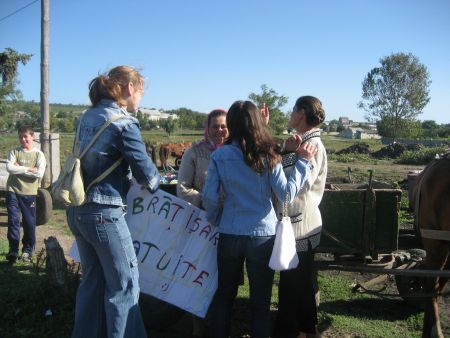
    Since its break with the Soviet Union, the Republic of Moldova has faced a rocky path towards establishing a democracy and an active civil society.  Although many international aid organizations have stepped in to help, the country’s own youth have remained a mostly untapped resource in the process of rebuilding.  The youth development approach recognizes youth as an asset to positive change at the community level.  With that in mind, a ten session “Practical Leadership Course” was developed for the youth of a small Moldovan town.  The course focused on essential skills for community activism and leadership, and was based on the principles of non-formal education and the “small wins theory.”  The purpose of this project was to: 1) increase youth’s capacity to affect change in their local community, 2) increase youth self-efficacy, and 3) positively influence the beliefs that youth held about the future of their community and their country.  Surveys measuring youth beliefs and community involvement were administered pre- and post intervention, as well as at follow-up, one year later.  Results show that by developing and using community-based leadership competencies to create positive social change, youth increased their self-efficacy and became increasingly involved in their community.  Finally, several “real world” results of the course are discussed, including structural changes to community life that support youth involvement and leadership post graduation from the course.

    Republica Moldova a trecut printr-o perioada dificila in urma destramarii Uniunii Sovietice, urmind directia stabilirii unui stat democratic cu o societate civila activa. In procesul reconstruirii, tineretul ramine a fi o sursa nevalorificata cu toate ca multe organizatii internationale au acordat un anumit ajutor la nivel organizational. Dezvoltarea tinerilor presupune recunoasterea acestui grup ca o valoare in procesul instituirii anumitor schimbari pozitive la nivel comunitar. Luind in cosideratie aceasta realitate, cursul de “Liderism Practic” a fost elaborat pentru tinerii din localicatile rurale ale Moldovei. Obiectivele cursului s-au axat in jurul abilitatilor esentiale pentru activismul comunitar, avind la baza educatia non-formala si teoria de “cistig minim”. Scopul acestui proiect a fost de a spori: 1) capacitatea tinerilor de a influenta schimbari in propriile comunitati, 2) eficacitatea proprie, 3) increderea tinerilor de a influenta pozitiv viitorul comunitatii si a tarii in care locuiesc. Studiu cercetare evaluind opinia tinerilor si a participarii acestora in viata comunitatii a fost efectuat anterior si post interventiei, cit si dupa un an. Rezultatele studiului arata o crestere a eficacitatii tinerilor si implicarii acestora in comunitate in urma dezvoltarii si utilizarii competentelor liderismului comunitar pentru a institui schimbari sociale pozitive. La sfirsit sunt prezentate rezultatele reale ale cursului, cuprinzind scmibari la nivel de structura a vietii comunitare care promoveaza implicarea tinerilor in urma absolvirii cursului.


  4. Exclusion and Cultural Diversity: A Community-Based Experience with Dominican Immigrants

    The following article reflects and presents an intercultural experience within the context of Puerto Rico through the Voces con Eco (Voices with Echoes) project. In this work we contextualize our experience within the Caribbean and Puerto Rican domain and the cultural diversity phenomena that impregnates our every day life. Then we explain how an intercultural educational intervention is relevant and we present Voces con Eco and our experience in Puerto Rico with the Dominican Republic immigrant community. Through this project we indented to promote the value of cultural diversity, rich coexistence and incentive a curiosity towards different cultures. Through research, developing intercultural skills, particular educational material to be used in workshops, filmed documentaries and further research across the recipient country (in this case across Puerto Rico) we think that a very rich intervention was enacted.

SCRA Mini Grant Spotlight

  1. The Denali Center, Fairbanks Alaska USA

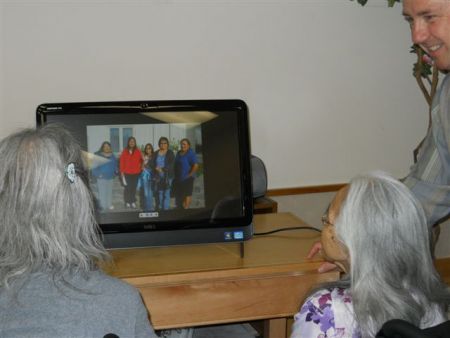
    The Community Mini-Grant was founded in 2010 with the intention of supporting small, time-sensitive community-based projects that are consistent with SCRA’s mission, principles, and goals. We are happy to support the great work being done by SCRA members and their community partners, and even happier to be able to highlight examples of this work and share them with the GJCPP readership.  Below, Dr. Jordan Lewis provides us with insight into the Denali Center, in Fairbanks, Alaska, and a description of the impact that Community Mini-Grant funding had on his work there.