
Celliforma rozeni, a new ichnospecies of bee (Hymenoptera: Anthophila) brood cell from the Eocene of Wyoming
DOI:
https://doi.org/10.17161/jom.vi149.24979Abstract
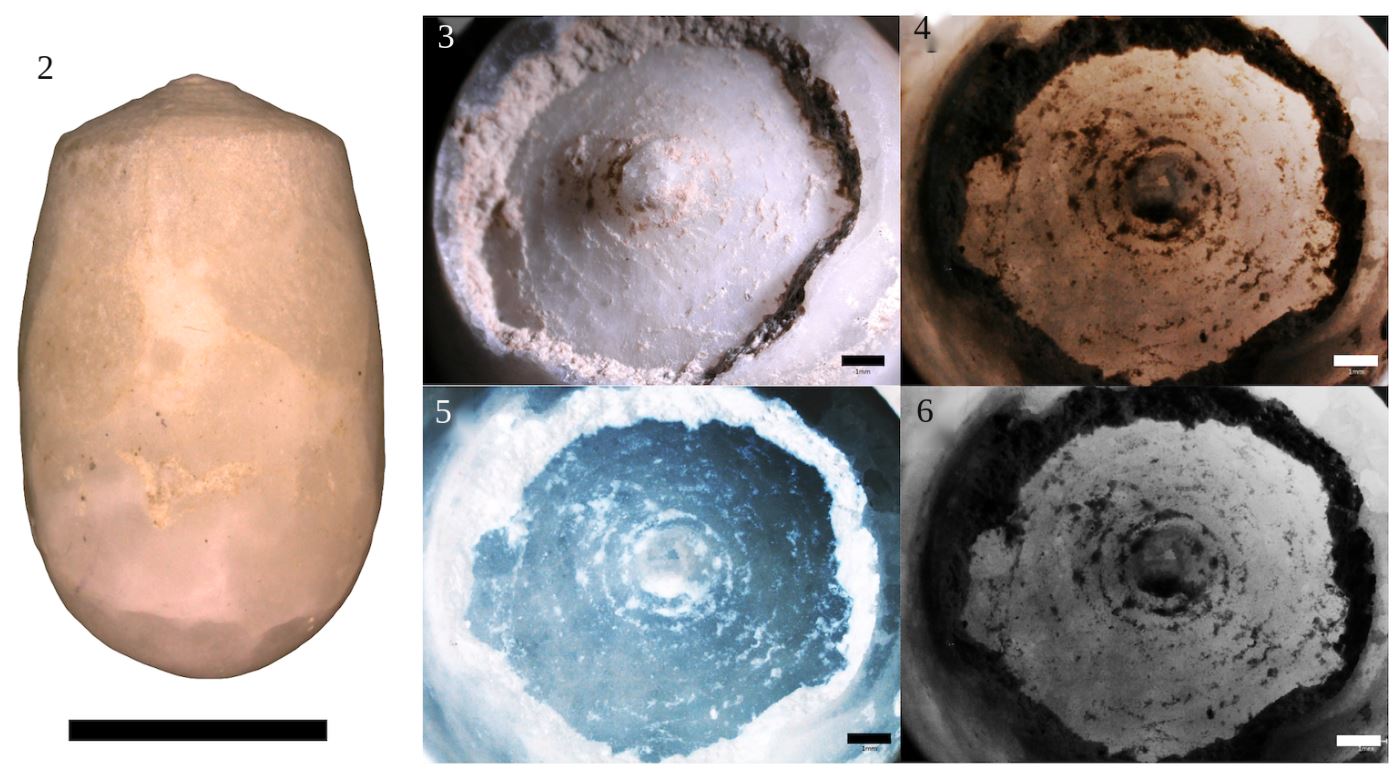
Trace fossils of bee brood cells provide direct evidence of nesting behavior in deep time and are particularly valuable where body fossils of bees are rare or absent. The ichnogenus Celliforma Brown represents the principal ichnotaxonomic framework for interpreting fossil brood cells of solitary ground-nesting bees, yet ichnotaxonomic resolution within this group depends critically on the recognition of discrete, behaviorally meaningful constructional characters rather than preservational variation. Here we describe Celliforma rozeni Knecht & Buchmann, isp. nov., from the Early Eocene Wagon Bed Formation of Wyoming, USA. This new ichnospecies is diagnosed by a consistently expressed dextral spiral apical closure composed of seven to eight turns, a feature that exceeds the four to five turns characteristic of the type ichnospecies C. spirifer and falls outside the known range of variation for previously described taxa. The description is based on a holotype and multiple paratypes housed in the Museum of Comparative Zoology, Harvard University, and examined alongside more than 100 additional specimens from the Jerome Rozen Bee Nests Collection (American Museum of Natural History) and private collections. Comparisons of spiral turn number and cell dimensions (apex-base height, maximum width), alongside comparative ichnotaxonomic analysis, support the recognition of C. rozeni as a distinct ichnospecies. A revised key to all five valid ichnospecies of Celliforma is provided. In extant solitary bees, brood-cell closure architecture, including spiral turn number, reflects species-specific and inherited motor programs rather than ontogenetic or environmental variation. Accordingly, C. rozeni is interpreted as a distinct behavioral ichnotaxon, likely representing a separate tracemaker lineage within early Cenozoic ground-nesting bees. The recognition of C. rozeni expands the documented behavioral diversity of Eocene solitary bees and adds resolution to the fossil record of pollinators. The coexistence of multiple Celliforma ichnospecies within Wagon Bed paleosols suggests behavioral differentiation and niche partitioning among ground-nesting bees by the early Cenozoic, underscoring the utility of fine-scale brood-cell architecture for reconstructing pollinator community structure in deep time.
References
Ascher, J.S. & J. Pickering. 2024. Discover Life bee species guide and world checklist (Hymenoptera: Apoidea: Anthophila). [http://www.discoverlife.org/mp/20q?guide=Apoidea_species; last accessed 1 March 1 2026].
Bown, T.M. 1980. Summary of latest Cretaceous and Cenozoic sedimentary, tectonic, and erosional events, Bighorn Basin, Wyoming. In: Gingerich, P.D. (Ed.), Early Cenozoic Paleontology and Stratigraphy of the Bighorn Basin, Wyoming. Papers on Paleontology 24: 25–32. University of Michigan; Ann Arbor, MI; vi+146 pp.
Bown, T.M. & M.J. Kraus. 1983. Ichnofossils of the alluvial Willwood Formation (lower Eocene), Bighorn Basin, northwest Wyoming, U.S.A. Palaeogeography, Palaeoclimatology, Palaeoecology 43(1–2): 95–128. https://doi.org/10.1016/0031-0182(83)90050-0
Bown, T.M., S.T. Hasiotis, J.F. Genise, F. Maldonado, & E.M. Brouwers. 1997. Trace fossils of Hymenoptera and other insects, and paleoenvironments of the Claron Formation (Paleocene and Eocene), southwestern Utah. U.S. Geological Survey Bulletin 2153-C: 41–58.
Branstetter, M.G., B.N. Danforth, J.P. Pitts, B.C. Faircloth, P.S. Ward, M.L. Buffington, M.W. Gates, R.R. Kula & S.G. Brady. 2017. Phylogenomic insights into the evolution of stinging wasps and the origins of ants and bees. Current Biology 27(7): 1019–1025. https://doi.org/10.1016/j.cub.2017.03.027
Brown, R.W. 1934. Celliforma spirifer, the fossil larval chambers of mining bees. Journal of the Washington Academy of Sciences 24(12): 532–539.
Brown, R.W. 1935. Further notes on fossil larval chambers of mining bees. Journal of the Washington Academy of Sciences 25(12): 526–528.
Cane, J.H. 1981. Dufour's gland secretion in the cell linings of bees (Hymenoptera: Apoidea). Journal of Chemical Ecology 7: 403–410. https://doi.org/10.1007/BF00995762
Cardinal, S., & B.N. Danforth. 2013. Bees diversified in the age of eudicots. Proceedings of the Royal Society B 280: 20122686. https://doi.org/10.1098/rspb.2012.2686
Dall, W.H. 1915. A monograph of the molluscan fauna of the Orthaulax pugnax zone of the Oligocene of Tampa, Florida (No. 90–91). US Government Printing Office.
Danforth, B.N., S. Sipes, J. Fang, & S.G. Brady. 2006. The history of early bee diversification based on five genes plus morphology. Proceedings of the National Academy of Sciences 103(41): 15118–15123. https://doi.org/10.1073/pnas.0604033103
Danforth, B.N., R.L. Minckley, & J.L. Neff. 2019. The Solitary Bees: Biology, Evolution, Conservation. Princeton University Press; Princeton, NJ; xiii+488 pp.
Elliott, D.K., & J.D. Nations. 1998. Bee burrows in the Late Cretaceous (Late Cenomanian) Dakota Formation, northeastern Arizona. Ichnos 5(4): 243–253. https://doi.org/10.1080/10420949809386423
Engel, M.S. 2000. A new interpretation of the oldest fossil bee (Hymenoptera: Apidae). American Museum Novitates 3296: 1–11. https://doi.org/10.1206/0003-0082(2000)3296<0001:ANIOTO>2.0.CO;2
Engel, M.S., C. Rasmussen, R. Ayala, & F.F. de Oliveira. 2023. Stingless bee classification and biology (Hymenoptera, Apidae): A review, with an updated key to genera and subgenera. ZooKeys 1172: 239–312. https://doi.org/10.3897/zookeys.1172.104944
Figueroa, L.L., J.J. Maccaro, E. Krichilsky, D. Yanega, & Q.S. McFrederick. 2021. Why did the bee eat the chicken? Symbiont gain, loss, and retention in the vulture bee microbiome. MBio 12: e02317–21. https://doi.org/10.1128/mBio.02317-21
Genise, J.F. 2000. The ichnofamily Celliformidae for Celliforma and allied ichnogenera. Ichnos 7(4): 267–282. https://doi.org/10.1080/10420940009380166
Genise, J.F. 2017. Ichnoentomology: Insect Traces in Soils and Paleosols. Springer International Publishing, Cham, 695 pp.
Genise, J.F., & T.M. Bown. 1994. New Miocene scarabeid and hymenopterous nests and early Miocene (Santacrucian) paleoenvironments, Patagonian Argentina. Ichnos 3(2): 107–117. https://doi.org/10.1080/10420949409386378
Genise, J.F., M.G. Mángano, L.A. Buatois, J.H. Laza, & M. Verde. 2000. Insect trace fossil associations in paleosols: the Coprinisphaera ichnofacies. Palaios 15(1): 49–64. https://doi.org/10.1669/0883-1351(2000)015<0049:ITFAIP>2.0.CO;2
Genise, J.F., E.S. Bellosi, L.C. Sarzetti, J.M. Krause, P.A. Dinghi, M.V. Sánchez, A.M. Umazano, P. Puerta, L.F. Cantil, & B.R. Jicha. 2020. 100 Ma sweat bee nests: Early and rapid co-diversification of crown bees and flowering plants. PLoS One 15(1): p.e0227789. https://doi.org/10.1371/journal.pone.0227789
Gingerich, P.D. 1983. Paleocene-Eocene faunal zones and a preliminary analysis of Laramide structural deformation in the Clark's Fork Basin, Wyoming. Wyoming Geological Association Guidebook, 34th Annual Field Conference: 185–195.
Grimaldi, D., & M.S. Engel. 2005. Evolution of the Insects. Cambridge University Press, UK; xv+755 pp.
Guerrero-Arenas, R., E. Jiménez-Hidalgo, & J.F. Genise. 2018. The oldest beetle and bee ichnofossils from Mexico and their paleoenvironmental implications. Ichnos 25(4): 269–273. https://doi.org/10.1080/10420940.2017.1386184
Hefetz, A., H.M. Fales, & S.W. Batra. 1979. Natural polyesters: Dufour's gland macrocyclic lactones form brood cell laminesters in Colletes bees. Science 204(4391): 415–417. https://doi.org/10.1126/science.204.4391.415
Keefer, W.R. 1965. Stratigraphy and geologic history of the uppermost Cretaceous, Paleocene, and lower Eocene rocks in the Wind River Basin, Wyoming. U.S. Geological Survey Professional Paper 495–A: 77pp. https://doi.org/10.3133/pp495A
Klein, A.M., B.E. Vaissière, J.H. Cane, I Steffan-Dewenter, S.A. Cunningham, C. Kremen, & T. Tscharntke. 2007. Importance of pollinators in changing landscapes for world crops. Proceedings of the royal society B: biological sciences 274(1608): 303–313. https://doi.org/10.1098/rspb.2006.3721
Kraus, M.J., & S. Riggins. 2007. Transient drying during the Paleocene-Eocene Thermal Maximum (PETM): Analysis of paleosols in the Bighorn Basin, Wyoming. Palaeogeography, Palaeoclimatology, Palaeoecology 245 (3–4): 444–461. https://doi.org/10.1016/j.palaeo.2006.09.011
Krombein, K.V. 1967. Trap-nesting Wasps and Bees: Life Histories, Nests, and Associates. Smithsonian Press, Washington, DC; vi+570 pp.
Michener, C.D. 1979. Biogeography of the bees. Annals of the Missouri Botanical Garden 66(3): 277–347. https://doi.org/10.2307/2398833
Michener, C.D. 2007. The Bees of the World [2nd Edition]. Johns Hopkins University Press; Baltimore, MD; xvi+[i]+953 pp., 20 pls.
Michener, C.D., & D.A. Grimaldi. 1988. The oldest fossil bee: Apoid history, evolutionary stasis, and antiquity of social behavior. Proceedings of the National Academy of Sciences 85(17): 6424–6426. https://doi.org/10.1073/pnas.85.17.6424
Potts, S.G., B. Vulliamy, A. Dafni, G. Ne'eman, & P. Willmer. 2003. Linking bees and flowers: how do floral communities structure pollinator communities? Ecology (84): 2628–2642. https:/doi.org/10.1890/02-0136
Roubik, D.W. 2006. Stingless bee nesting biology. Apidologie 37(2): 124–143. https://doi.org/10.1051/apido:2006026
Sabino, W.O., I. Alves-dos-Santos, E.P. Queiroz, L.B. de Faria, D.R. Papaj, S.L. Buchmann, & C.I. da Silva. 2021. Nesting biology of Centris (Paracentris) burgdorfi (Apidae: Centridini). Journal of Apicultural Research 60(5): 817–827. https://doi.org/10.1080/00218839.2020.1717760
Sann, M., O. Niehuis, R.S. Peters, C. Mayer, A. Kozlov, L. Podsiadlowski, S. Bank, K. Meusemann, B. Misof, C. Bleidorn. & M. Ohl. 2018. Phylogenomic analysis of Apoidea sheds new light on the sister group of bees. BMC Evolutionary Biology (18): 71. https://doi.org/10.1186/s12862-018-1155-8
Sarzetti, L.C., C.C. Labandeira, J. Muzón, P. Wilf, N.R. Cúneo, K.R. Johnson, & J.F. Genise. 2008. Odonatan endophytic oviposition from the Eocene of Patagonia: the ichnogenus Paleoovoidus and implications for behavioral stasis. Journal of Paleontology 83(3): 1035–1051. https://doi.org/10.1666/08-121.1
Sarzetti, L.C., P.A. Dinghi, J.F. Genise, E. Bedatou, & M. Verde. 2014. Curved fossil bee cells as tools for reconstructing the evolutionary history and palaeogeographical distribution of Diphaglossinae (Apoidea, Colletidae). Palaeontology 57(2): 447–455. https://doi.org/10.1111/pala.12074
Smith, M.E., B. Singer, & A.R. Carroll. 2003. 40Ar/39Ar geochronology of the Eocene Green River Formation, Wyoming. Geological Society of America Bulletin 115(5): 549–565. https://doi.org/10.1130/0016-7606(2003)115<0549:AGOTEG>2.0.CO;2
Smith, M.E., A.R. Carroll, & B.S. Singer. 2008. Synoptic reconstruction of a major ancient lake system: Eocene Green River Formation, western United States. Geological Society of America Bulletin 120(1–2): 54–84. https://doi.org/10.1130/B26073.1
Viñola-López, L.W., M. Riegler, S.V. Olson, J. Orihuela, J.A. Genaro, & A. Sánchez-Rosario. 2025. Trace fossils within mammal remains reveal novel bee nesting behaviour. Royal Society Open Science 12(12):251748. https://doi.org/10.1098/rsos.251748
Wilf, P. 2000. Late Paleocene-early Eocene climate changes in southwestern Wyoming: Paleobotanical analysis. Geological Society of America Bulletin 112(2): 292–307. https://doi.org/10.1130/0016-7606(2000)112%3C292:LPECCI%3E2.0.CO;2
Wing, S.L., G.J. Harrington, F.A. Smith, J.I. Bloch, D.M. Boyer, & K.H. Freeman. 2005. Transient floral change and rapid global warming at the Paleocene-Eocene boundary. Science 310(5750): 993–996. https://doi.org/10.1126/science.1116913
Wing, S.L., & E.D. Currano. 2013. Plant response to a global greenhouse event 56 million years ago. American Journal of Botany 100(7): 1234–1254. https://doi.org/10.3732/ajb.1200554
Zachos, J., M. Pagani, L. Sloan, E. Thomas, & K. Billups. 2001. Trends, rhythms, and aberrations in global climate 65 Ma to present. Science 292(5517): 686–693. https://doi.org/10.1126/science.1059412
Downloads
Published
Issue
Section
License
Copyright (c) 2026 Richard J. Knecht, Stephen Buchmann

This work is licensed under a Creative Commons Attribution-NonCommercial-NoDerivatives 4.0 International License.
Copyright for articles published in Journal of Melittology is retained by the authors, with first publication rights granted to the journal. By virtue of their appearance in this open access journal, articles are free to use, with proper attribution and permission of the authors, in educational and other non-commercial settings.