Standardized protocols for collecting data on bee-flower interactions and the associated floral community
DOI:
https://doi.org/10.17161/jom.vi123.23861Abstract
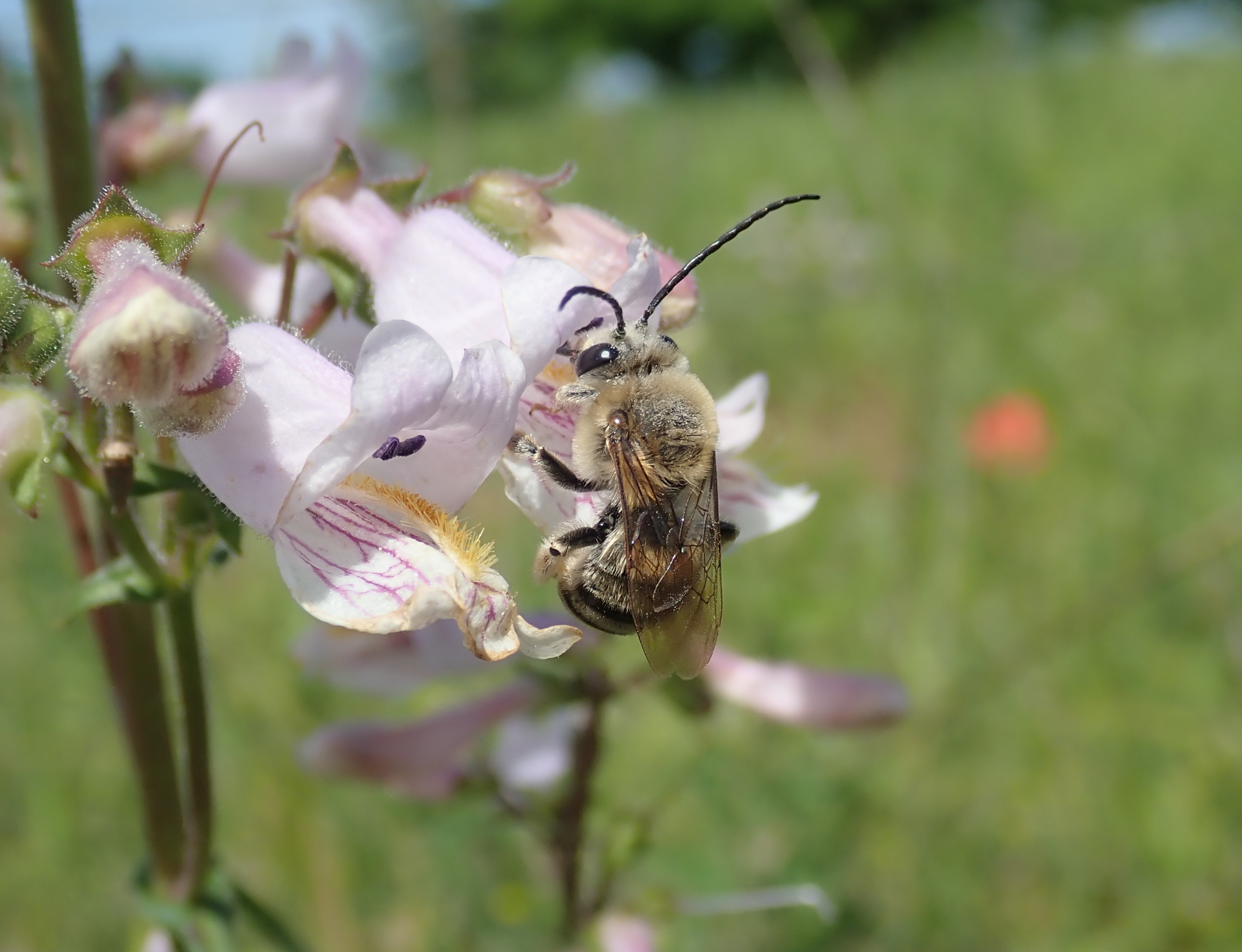
Pollen and nectar from flowers constitute the primary food resources of bees, inextricably linking bee and flowering plant communities in space and time. Thus, our understanding of bee biology and distribution can be greatly enhanced by documenting interactions between bees and their host plant species. Plant-pollinator interaction data are routinely collected in studies with diverse research goals, but the lack of standardization in data collection has limited our ability to integrate datasets and address outstanding questions in bee ecology, conservation, and pollination biology. Here, we provide standardized protocols for (A) documenting plant-pollinator interactions and (B) quantifying associated floral resources available to foraging bees. These protocols can be combined for a more detailed understanding of plant-pollinator interactions and can be applied in inventories, surveys, and monitoring programs of bees. We also provide case studies demonstrating their application. We discuss tradeoffs that are inevitable in any methodological approach, including the use of lethal versus non-lethal sampling approaches, and highlight the need to prioritize rigorous testing of the scalability and generalizability of current methodologies. These protocols are part of a series developed in association with the U.S. National Native Bee Monitoring Network to standardize bee monitoring practices.
References
Alarcón, R., N.M. Waser, & J. Ollerton. 2008. Year-to-year variation in the topology of a plant-pollinator interaction network. Oikos. 117(12): 1796–1807. https://doi.org/10.1111/j.0030-1299.2008.16987.x
Albano, S., E. Salvado, S. Duarte, A. Mexia, & P.A.V. Borges. 2009. Pollination effectiveness of different strawberry floral visitors in Ribatejo, Portugal: Selection of potential pollinators. Part 2. Advances in Horticultural Science 23(4): 246–253. https://www.jstor.org/stable/42883505
Baldwin, B.G., D. Goldman, D.J. Keil, R. Patterson, & T.J. Rosatti, eds. 2012. The Jepson Manual: Vascular Plants of California. University of California Press; Berkeley, CA; xvii+1523 pp. https://doi.org/10.1525/9780520951372
Bascompte, J., & M. Scheffer. 2023. The resilience of plant-pollinator networks. Annual Review of Entomology 68: 363–380. https://doi.org/10.1146/annurev-ento-120120-102424
Bowler, E., V. Lefebvre, M. Pfeifer, & R.M. Ewers. 2022. Optimising sampling designs for habitat fragmentation studies. Methods in Ecology and Evolution 13(1): 217–229. https://doi.org/10.1111/2041-210X.13731
Brosi, B.J., & H.M. Briggs. 2013. Single pollinator species losses reduce floral fidelity and plant reproductive function. Proceedings of the National Academy of Sciences of the United States of America 110(32): 13044–13048. https://doi.org/10.1073/pnas.1307438110
Bruninga-Socolar, B., E.V. Lonsdorf, I.G. Lane, Z.M. Portman, & D.P. Cariveau. 2023. Making plant-pollinator data collection cheaper for restoration and monitoring. The Journal of Applied Ecology 60(9): 2031–2039. https://doi.org/10.1111/1365-2664.14472
Burkle, L.A., J.C. Marlin, & T.M. Knight. 2013. Plant-pollinator interactions over 120 years: Loss of species, co-occurrence, and function. Science 339(6127): 1611–1615. https://doi.org/10.1126/science.1232728
Carstensen, D.W., M. Sabatino, & L.P.C. Morellato. 2016. Modularity, pollination systems, and interaction turnover in plant-pollinator networks across space. Ecology 97(5): 1298–1306. https://doi.org/10.1890/15-0830.1
Cirtwill, A.R., T. Roslin, C. Rasmussen, J.M. Olesen, & D.B. Stouffer. 2018. Between-year changes in community composition shape species’ roles in an Arctic plant-pollinator network. Oikos 127(8): 1163–1176. https://doi.org/10.1111/oik.05074
Colgan, A.M., R.G. Hatfield, A. Dolan, W. Velman, R.E. Newton, & T.A. Graves. 2024. Quantifying effectiveness and best practices for bumblebee identification from photographs. Scientific Reports 14: 830. https://doi.org/10.1038/s41598-023-41548-w
Danforth, B.N., R.L. Minckley, & J.L. Neff. 2019. The Solitary Bees: Biology, Evolution, Conservation. Princeton University Press; Princeton, NJ; xi+472 pp.
Drucker, D., J.A. Salim, J. Poelen, F.M. Soares, R.A. Gonzalez-Vaquero, J. Ollerton, M. Devoto, M. Rünzel, D. Robinson, M. Kasina, C. Taliga, C. Parr, D. Cox-Foster, E. Hill, M. Motta Maués, A.M. Saraiva, K. Agostini, L.G. Carvalheiro, P. Bergamo, P., I. Varassin, D.A. Alves, B. Marques, F.C. Tinoco, A.R. Rech, J. Cardona-Duque, M. Idárraga, M.C, Agudelo-Zapata, E. Marentes Herrera, & M. Trekels. 2024. WorldFAIR (D10.2) Agricultural Biodiversity Standards, Best Practices and Guidelines Recommendations (Version 1). Zenodo. https://doi.org/10.5281/zenodo.10666593
Du Clos, B., K.C. Seltmann, N.E. Turley, C. Maffei, E.M. Tucker, I.G. Lane, H.K. Levenson, & S.H. Woodard. 2024a. Improving the standardization of wild bee occurrence data: Towards a formal wild bee data standard. Journal of Melittology 123(2): 1–x.
Du Clos, B., K.C. Seltmann, N.E. Turley, C. Maffei, E.M. Tucker, I.G. Lane, H.K. Levenson, & S.H. Woodard. 2024b. Templates for The Wild Bee Data Standard (1.0.0). Zenodo. https://doi.org/10.5281/zenodo.14187862
Eigenbrod, F., S.J. Hecnar, & L. Fahrig. 2011. Sub-optimal study design has major impacts on landscape-scale inference. Biological Conservation 144(1): 298–305. https://doi.org/10.1016/j.biocon.2010.09.007
Fowler, J. 2016. Specialist bees of the Northeast: Host plants and habitat conservation. Northeastern Naturalist 23(2): 305–320. https://doi.org/10.1656/045.023.0210
Fowler, J., & S. Droege. 2020. Pollen specialist bees of the Eastern United States. [https://jarrodfowler.com/specialist_bees.html; last accessed November 2024].
Frost, E.H., D. Shutler, & N.K. Hillier. 2011. Effects of cold immobilization and recovery period on honeybee learning, memory, and responsiveness to sucrose. Journal of Insect Physiology 57: 1385–1390. https://doi.org/10.1016/j.jinsphys.2011.07.001
Fründ, J., C.F. Dormann, & T. Tscharntke. 2011. Linné’s floral clock is slow without pollinators-flower closure and plant-pollinator interaction webs: Flower closure and plant-pollinator interactions. Ecology Letters 14(9): 896–904. https://doi.org/10.1111/j.1461-0248.2011.01654.x
Gerner, E.E., & R.D. Sargent. 2022. Local plant richness predicts bee abundance and diversity in a study of urban residential yards. Basic and Applied Ecology 58: 64–73. https://doi.org/10.1016/j.baae.2021.11.004
Gibson, R.H., B. Knott, T. Eberlein, & J. Memmott. 2011. Sampling method influences the structure of plant-pollinator networks. Oikos 120(6): 822–831. https://doi.org/10.1111/j.1600-0706.2010.18927.x
Gonzalez, V.H., K. Oyen, N. Vitale, & R. Ospina. 2022. Neotropical stingless bees display a strong response in cold tolerance with changes in elevation. Conservation Physiology 10: coac073. https://doi.org/10.1093/conphys/coac073
Hanley, N., T.D. Breeze, C. Ellis, & D. Goulson. 2015. Measuring the economic value of pollination services: Principles, evidence and knowledge gaps. Ecosystem Services 14: 124–132. https://doi.org/10.1016/j.ecoser.2014.09.013
Harmon-Threatt, A.N., & S.D. Hendrix. 2015. Prairie restorations and bees: The potential ability of seed mixes to foster native bee communities. Basic and Applied Ecology 16(1): 64–72. https://doi.org/10.1016/j.baae.2014.11.001.
Hung, K.L.J., J.S. Ascher, J.A. Davis & D.A. Holway. 2019a. Ecological filtering in scrub fragments restructures the taxonomic and functional composition of native bee assemblages. Ecology 100(5) e02654. https://doi.org/10.1002/ecy.2654
Hung, K.L.J., J.M. Kingston, A. Lee, D.A. Holway, & J.R. Kohn. 2019b. Non-native honey bees disproportionately dominate the most abundant floral resources in a biodiversity hotspot. Proceedings of the Royal Society B: Biological Sciences 286: 20182901. https://doi.org/10.1098/rspb.2018.2901.
Hurd, P.D., W.E. LeBerge, & E.G. Linsley. 1980. Principal sunflower bees of North America with emphasis on the Southwestern United States (Hymenoptera, Apoidea). Smithsonian Contributions to Zoology 310: 1–158. https://doi.org/10.5479/si.00810282.310
Lane, I.G., C.R. Herron-Sweet, Z.M. Portman, & D.P. Cariveau. 2020. Floral resource diversity drives bee community diversity in prairie restorations along an agricultural landscape gradient. Journal of Applied Ecology 57(10): 2010–2018. https://doi.org/10.1111/1365-2664.13694
Levenson, H.K., B. Du Clos, T.A. Smith, S. Jepsen, J.G. Everett, N.M. Williams, & S.H. Woodard. 2024a. A call for standardization in wild bee data collection and curation. Journal of Melittology 123(2): 4–17. https://doi.org/10.17161/jom.vi123.22533
Levenson, H.K., O. Messinger Carril, N.E. Turley, C. Maffei, G. LeBuhn, T. Griswold, N.M. Williams, K.L.J. Hung, R.E. Irwin, B. Du Clos, & S.H. Woodard. 2024b. Standardized protocol for collecting community-level bee data. Journal of Melittology 123(4): 1–26. https://doi.org/10.17161/jom.vi123.22649
Levenson, H.K. & D.R. Tarpy. 2023. Planted pollinator habitat in agroecosystems: How does the pollinator community respond? Frontiers in Ecology and Evolution 11. https://doi.org/10.3389/fevo.2023.1060834
Ollerton, J., R. Winfree, & S. Tarrant. 2011. How many flowering plants are pollinated by animals? Oikos 120(3): 321–326. https://doi.org/10.1111/j.1600-0706.2010.18644.x
Oyen, K.J., L.E. Jardine, Z.M. Parsons, J.D. Herndon, J.P. Strange, J.D. Lozier, & M.E. Dillon. 2021. Body mass and sex, not local climate, drive differences in chill coma recovery times in common garden reared bumble bees. Journal of Comparative Physiology B 191: 843–845. https://doi.org/10.1007/s00360-021-01385-7
Packer, L., S.K. Monckton, T.M. Onuferko, & R.R. Ferrari. 2018. Validating taxonomic identifications in entomological research. Insect Conservation and Diversity 11(1): 1–12. https://doi.org/10.1111/icad.12284
Pasher, J., S.W. Mitchell, D.J. King, L. Fahrig, A.C. Smith, & K.E. Lindsay. 2013. Optimizing landscape selection for estimating relative effects of landscape variables on ecological responses. Landscape Ecology 28: 371–383. https://doi.org/10.1007/s10980-013-9852-6
Potts, S.G., B. Vulliamy, A. Dafni, G. Ne’eman, & P. Willmer. 2003. Linking bees and flowers: How do floral communities structure pollinator communities? Ecology 84(10): 2628–2642. https://doi.org/10.1890/02-0136
Salim, J.A., A.M. Saraiva, P.F. Zermoglio, K. Agostini, M. Wolowski, D.P. Drucker, F.M. Soares, P.J. Bergamo, I.G. Varassin, L. Freitas, M.M. Maués, A.R. Rech, A.K. Veiga, A.L. Acosta, A.C. Araujo, A. Nogueira, B. Blochtein, B.M. Freitas, B.C. Albertini, C. Maia-Silva, C.E.P. Nunes, C.S.S. Pires, C.F. Dos Santos, E.P. Queiroz, E.A. Cartolano, F.F. de Oliveira, F.W. Amorim, F.E. Fontúrbel, G.V. da Silva, H. Consolaro, I. Alves-Dos-Santos, I.C. Machado, J.S. Silva, K.P. Aleixo, L.G. Carvalheiro, M.A. Rocca, M. Pinheiro, M. Hrncir, N.S. Streher, P.A. Ferreira, P.M.C. de Albuquerque, P.K. Maruyama, R.C. Borges, T.C. Giannini, & V.L. G. Brito. 2022. Data standardization of plant-pollinator interactions. GigaScience 11: giac043. https://doi.org/10.1093/gigascience/giac043
Siopa, C., L.G. Carvalheiro, H. Castro, J. Loureiro, & S. Castro. 2024. Animal‐pollinated crops and cultivars—A quantitative assessment of pollinator dependence values and evaluation of methodological approaches. Journal of Applied Ecology 61(6): 1279–1288. https://doi.org/10.1111/1365-2664.14634
Smith, C., S. Joly, C. Antoine, B. Hyjazie, & J.R.K. Forrest. 2023. Regional plant abundance explains patterns of host use by pollen-specialist bees in eastern North America. Ecology 104(8): e4122. https://doi.org/10.1002/ecy.4122
Spiesman, B.J., & B.D. Inouye. 2013. Habitat loss alters the architecture of plant-pollinator interaction networks. Ecology 94(12): 2688–2696. https://doi.org/10.1890/13-0977.1
Spiesman, B.J., Gratton, C., Gratton, E., & Hines, H. 2024. Deep learning for identifying bee species from images of wings and pinned specimens. PLoS ONE 19(5): e0303383. https://doi.org/10.1371/journal.pone.0303383
Strange, J.P., M.M. López-Uribe, L. Whiteman, B.N. Danforth, S. Jha, H.K. Levenson, B. Du Clos, J.B.U. Koch, & S.H. Woodard. 2025. Standardized protocol for collecting bee samples for parasite and pathogen data. Journal of Melittology 123(8): https://doi.org/10.17161/jom.vi123.22598
Thorp, R.W., A.M. Wenner, & J.F. Barthell. 1994. Flowers visited by honey bees and native bees on Santa Cruz Island. In: Halverson, W.L., & G.J. Meadner (Eds.), Fourth California Islands Symposium: Update on Resources: 351–365. Santa Barbara Museum of Natural History; Santa Barbara, CA.
Thorp, R.W., A.M. Wenner, & J.F. Barthell. 2000. Pollen and nectar resource overlap among bees on Santa Cruz Island. In: Browne, D.R., K.L. Mitchell, & H.W. Chaney (Eds.), Fifth California Islands Symposium: 261–268. MBC Applied Environmental Sciences; Costa Mesa, CA.
Torresani, M., D. Kleijn, J.P.R. de Vries, H. Bartholomeus, L. Chieffallo, R. Cazzolla Gatti, V. Moudrý, D. Da Re, E. Tomelleri, & D. Rocchini. 2023. A novel approach for surveying flowers as a proxy for bee pollinators using drone images. Ecological Indicators 149: 110123. https://doi.org/10.1016/j.ecolind.2023.110123
Traveset, A., R. Castro-Urgal, X. Rotllàn-Puig, & A. Lázaro. 2018. Effects of habitat loss on the plant-flower visitor network structure of a dune community. Oikos 127(1): 45–55. https://doi.org/10.1111/oil.04154
Trekels, M., D. Pignatari Drucker, J.A. Salim, J. Ollerton, J. Poelen, F. Miranda Soares, M. Rünzel, M. Kasina, Q. Groom, & M. Devoto. 2023. WorldFAIR Project (D10.1) Agriculture-related pollinator data standards use cases report (Version 2). Zenodo. [https://doi.org/10.5281/zenodo.8356529; last accessed November 2024.]
Turley, N.E., S.E. Kania, I.R. Petitta, E.A. Otruba, D.J. Biddinger, T.M. Butzler, V.V. Sesler, & M.M. López-Uribe. 2024. Bee monitoring by community scientists: Comparing a collections-based program with iNaturalist. Annals of the Entomological Society of America 117(4): 220–233. https://doi.org/10.1093/aesa/saae014
Vázquez, D.P., & M.A. Aizen. 2003. Null model analyses of specialization in plant–pollinator interactions. Ecology 84(9): 2493–2501. https://doi.org/10.1890/02-0587
Vázquez, D.P., W.F. Morris, & P. Jordano. 2005. Interaction frequency as a surrogate for the total effect of animal mutualists on plants. Ecology Letters 8(10): 1088–1094. https://doi.org/10.1111/j.1461-0248.2005.00810.x
Vázquez, D.P., C.J. Melián, N.M. Williams, N. Blüthgen, B.R. Krasnov, & R. Poulin. 2007. Species abundance and asymmetric interaction strength in ecological networks. Oikos 116(7): 1120–1127. https://doi.org/10.1111/j.0030-1299.2007.15828.x
Watts, S., D.H. Ovalle, M.M. Herrera, & J. Ollerton. 2011. Pollinator effectiveness of native and non-native flower visitors to an apparently generalist Andean shrub, Duranta mandonii (Verbenaceae). Plant Species Biology 27(2): 147–158. https://doi.org/10.1111/j.1442-1984.2011.00337.x
Wcislo, W.T., & J.H. Cane. 1996. Floral resource utilization by solitary bees (Hymenoptera: Apoidea) and exploitation of their stored foods by natural enemies. Annual Review of Entomology 41: 257–286. https://doi.org/10.1146/annurev.en.41.010196.001353
Wenner, A.M., R.W. Thorp, & J.F. Barthell. 2009. Biological control and eradication of feral honey bee colonies on Santa Cruz Island, California: A Summary. In: Damiani, C.C., & D.K. Garcelon (Eds.), Proceedings of the 7th California Islands Symposium. Institute for Wildlife Studies: 327–335. Arcata, CA.
Westphal, C., W. Catrin, B. Riccardo, C. Gabriel, L. Ellen, M. Nicolas, P. Theodora, S.G. Potts, S.P.M. Roberts, S. Hajnalka, T. Thomas, B.E. Vaissière, W. Michal, J.C. Biesmeijer, W.E. Kunin, S. Josef, & S.D. Ingolf. 2008. Measuring bee diversity in different European habitats and biogeographical regions. Ecological Monographs 78(4): 653–671. https://doi.org/10.1890/07-1292.1
Wieczorek, J., D. Bloom, R. Guralnick, S. Blum, M. Döring, R. Giovanni, T. Robertson, & D. Vieglais. 2012. Darwin Core: An evolving community-developed biodiversity data standard. PloS One 7 (1): e29715. https://doi.org/10.1371/journal.pone.0029715
Williams, N.M. 2011. Restoration of nontarget species: Bee communities and pollination function in riparian forests. Restoration Ecology 19(4) 450–459. https://doi.org/10.1111/j.1526-100X.2010.00707.x
Williams, N.M., D. Cariveau, & R. Winfree. 2011. Bees in disturbed habitats use, but do not prefer, alien plants. Basic and Applied Ecology 12(4): 332–341. https://doi.org/10.1016/j.baae.2010.11.008
Williams, N.M., K.L. Ward, N. Pope, R. Isaacs, J. Wilson, E.A. May, J. Ellis, J. Daniels, A. Pence, K. Ullmann, & J. Peters. 2015. Native wildflower plantings support wild bee abundance and diversity in agricultural landscapes across the United States. Ecological Applications 25(8): 2119–2131. https://doi.org/10.1890/14-1748.1
Wilson, E.E., D. Holway, & J.C. Nieh. 2006. Cold anaesthesia decreases foraging recruitment in the New World bumblebee, Bombus occidentalis. Journal of Apicultural Research 45(4) 169–172. https://doi.org/10.1080/00218839.2006.11101343
Winfree, R., N.M. Williams, J. Dushoff, & C. Kremen. 2007. Native bees provide insurance against ongoing honey bee losses. Ecology Letters 10(11): 1105–1113. https://doi.org/10.1111/j.1461-0248.2007.01110.x
Downloads
Published
Issue
Section
License
Copyright (c) 2025 Daniel P. Cariveau, Keng-Lou James Hung, Neal M. Williams, David W. Inouye, Casey T. Burns, Ian G. Lane, Rebecca E. Irwin, Hannah K. Levenson, Brianne Du Clos, S. Hollis Woodard

This work is licensed under a Creative Commons Attribution-NonCommercial-NoDerivatives 4.0 International License.
Copyright for articles published in Journal of Melittology is retained by the authors, with first publication rights granted to the journal. By virtue of their appearance in this open access journal, articles are free to use, with proper attribution and permission of the authors, in educational and other non-commercial settings.